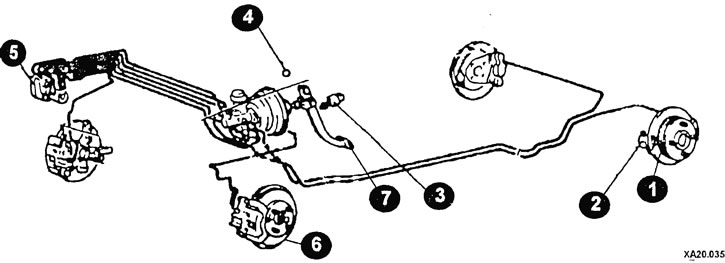
Typical elements of the braking system of models with ABS
1 - rear brake mechanism; 2 - rear wheel speed sensor; 3 - brake light switch; 4 - ABS indicator light; 5 - hydraulic block assembly; 6 - front wheel brake; 7 - brake pedal.
Some models are equipped with an electronic anti-lock braking system (ABS). Additional installation of the ABS system is not possible.
The ABS system consists of a conventional brake mechanism and various additional elements. In this case, we are talking about a hydraulic control device, four-wheel speed sensors and an electronic control device.
The speed sensors are installed in the steering knuckle of the front wheels and in the rear axle. The speed sensors send a corresponding signal to the electronic control device. The device analyzes the braking of the wheels and the slip of the tires on the road surface and, based on this, determines the pressure value for the hydraulic control device. Each front wheel is controlled separately, while both rear wheels are controlled together. A warning light is installed on the instrument panel, which lights up when a defect occurs in the system, i.e. when the ABS device fails.
Stop, turn off and turn on the engine again.
If the battery voltage is below 9.5V, charge the battery.
If the ABS warning light comes on at the start of the trip and then goes out, this indicates that the battery voltage was low but then increased.
[The text of the article was taken from the website: mitsubishiman.ru]
Check the contact at the battery terminals.
Raise the vehicle, remove the front wheels and check the wheel speed sensor wiring.
Checking the ABS system using a test lamp
Check the brake system and brake pipe and hose connections for leaks.
The ABS warning light should come on when the ignition is turned on.
After starting the engine, the indicator lamp should flash briefly twice.
If you leave the engine idling for approximately 2 minutes, the ABS warning light should not come on during this time.
During a short test drive (approximately 1 minute) at a speed of no more than 30 km/h, the ABS warning lamp should not light up.
Checking and clearing ABS fault codes
Using a special wiring harness, ground terminal #1 of the diagnostic connector.
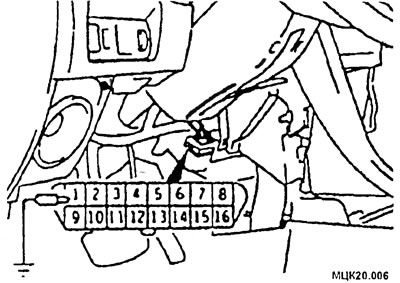
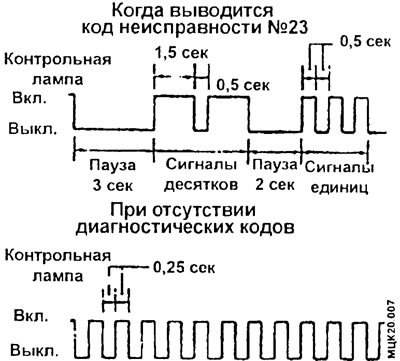
Turn on the ignition and read the diagnostic trouble code based on the number and duration of flashes of the ABS warning lamp.
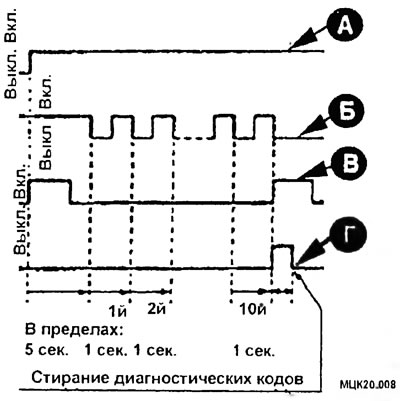
Diagnostic trouble codes can be "erased" by operating the brake light switch ten times in the pattern shown in the illustration with the ABS system on and the vehicle speed at 10 km/h or less.