



Contents: Motor oil ⤓ Coolant ⤓ Windshield washer fluid ⤓ Battery electrolyte ⤓ Working fluid of the brake system…⤓
Note: The following fluids should be checked every 400 km (250 mi) or weekly. In addition, fluid levels should be checked during the following maintenance procedures. Regardless of periodic maintenance, be sure to check for leaks that should be repaired immediately.
Warning: The electric cooling fan may turn on at any time, even if the ignition is off. When working near the fan, turn off the power to the fan or disconnect the cable from the negative battery terminal.
1. Working fluids are a key part of the lubrication, cooling, braking and windshield washer systems. Since these fluids are consumed and contaminated during normal vehicle operation, they must be topped up periodically. See Section "Recommended lubricants and working fluids" at the beginning of this chapter.
Note: When checking the fluid levels, the vehicle must be on a level surface.
Motor oil
2. The engine oil level is checked with a dipstick located on the side of the front of the engine (on the drive belt side). The dipstick is installed in a metal tube through which it passes into the engine sump.
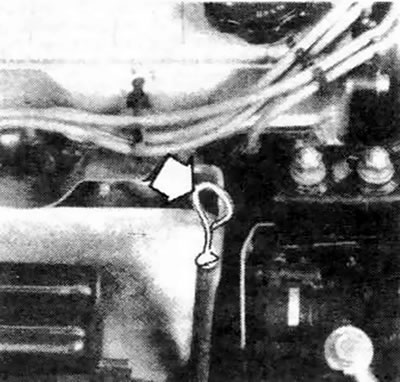
4.2b. Typical position of oil dipstick (Galant shown)
3. The oil level should be checked before driving or 15 minutes after turning off the engine. If you check the oil level immediately after turning off the engine, the measurement will be inaccurate because some oil remains in the upper channels of the engine.
4. Remove the dipstick from the tube and wipe it with a rag or paper. Insert the dipstick into the tube until it stops and remove it back. The oil level should be between the MIN and MAX marks on the end of the dipstick.
5. Do not overfill the engine with oil, as this may cause spark plug fouling, oil leakage or damage to the seals.
6. To fill the oil, remove the threaded cap located on the valve cover. Use a funnel to avoid spilling the oil.
7. Checking the oil level is an important preliminary element of maintenance. A constantly falling oil level indicates leakage through damaged seals, loose connections, or worn rings or valve guides. If the oil is milky or contains water, the cylinder head gasket may have burned out. The engine should be checked immediately. The condition of the oil should also be checked. Each time you check the oil level, before wiping the dipstick, run your thumb and forefinger across it. If you then find fine dust or metal particles on the dipstick, the oil should be changed (section 8).
Coolant
Warning: Do not allow antifreeze to come into contact with your skin or vehicle paint. Wash off any spilled antifreeze immediately with plenty of water. Even small amounts of antifreeze can be fatal if ingested. Wash the garage floor and any spilled antifreeze immediately. Repair any cooling system leaks as soon as possible.
8. All vehicles described in this manual are equipped with a sealed cooling system. The coolant reservoir, located in the engine compartment, is connected by a hose to the base of the cooling system filler cap. If the coolant temperature rises while the engine is running, it can escape through the sealed cap and then through the connecting hose into the reservoir. After the engine has cooled, the liquid automatically flows back into the cooling system, restoring the normal level.
9. The coolant level should be checked regularly.
Warning: Do not remove the radiator cap when the engine is hot. The coolant level changes depending on the engine temperature. When the engine is cold, the coolant level should be at or slightly above the Low mark. After the engine has warmed up, the coolant level should be at or near the Full mark. Otherwise, let the coolant cool, then remove the cap from the reservoir and top up the coolant to the correct level using a 50/50 mixture of ethylene glycol antifreeze and water. (Commercially available coolant (Tosol) is usually already diluted to the required ratio.).
10. After a short run, check the coolant level. If only a small amount of fluid needs to be added, you can use water. However, constantly adding water leads to dilution of the antifreeze. To maintain the desired mixture composition, always add antifreeze of the correct composition. Use a plastic bottle as a container for antifreeze. Do not use corrosion inhibitors or additives.
11. If the coolant level drops significantly, there may be leaks in the system. Check the radiator, hoses, cooling system filler cap, drain plugs, breathers and water pump (see section 14) If there are no leaks, have the radiator cap valve opening pressure checked at a service station.
12. If you need to open the radiator cap, wait until the system has cooled down completely, then wrap a thick cloth around the cap and turn the cap to the first stop. If steam or liquid starts to leak out, wait until the system has cooled down even more, then remove the cap.
13. Also check the condition of the coolant. It should be relatively clean. If it is brown or rusty, it should be drained, the system flushed and refilled. Even if the fluid looks normal, the corrosion inhibitor will eventually stop working, so the fluid should be changed at the specified intervals.
Windshield washer fluid
14. The windshield washer fluid is located in a plastic tank, which is located in the engine compartment.
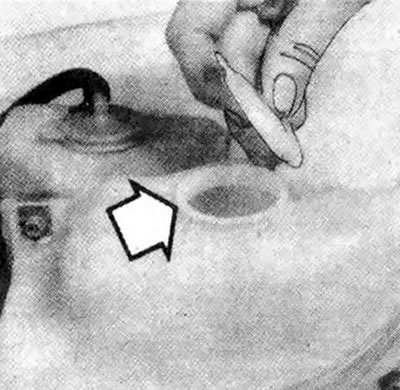
4.14a. On some models, the windshield washer reservoir is located next to the coolant reservoir - do not confuse them.
15. In temperate climates, you can fill the tank with plain water, but not more than 2/3 of the tank's volume to allow for expansion of the water when it freezes. In colder climates, use a commercially available freezing point lowering fluid. Mix it with water according to the manufacturer's instructions.
Warning: Do not use antifreeze in the engine cooling system - it will damage the paintwork of the vehicle.
16. To prevent ice from forming in cold weather, warm up the windshield with warm air before using the washer.
Battery electrolyte
17. All vehicles reviewed in this manual are equipped with sealed (except for the ventilation holes) batteries that do not have filler caps. There is no need to add water to these batteries. If your vehicle has a battery that requires periodic maintenance, you will need to periodically remove the caps and check the electrolyte level. Such checks are especially necessary during the hot summer period.
Working fluid of the brake system and clutch release drive
18. The brake master cylinder is mounted in front of the brake booster in the engine compartment. The clutch master cylinder (used on later models with a manual transmission) is located next to the brake master cylinder. The clutch release fluid level is checked in the same way as the brake system.
19. The fluid in the tank is clearly visible. Its level should be within the MIN (or A) and MAX marks on the tank. If the fluid level is too low, wipe the tank cap before adding to avoid contamination of the fluid.
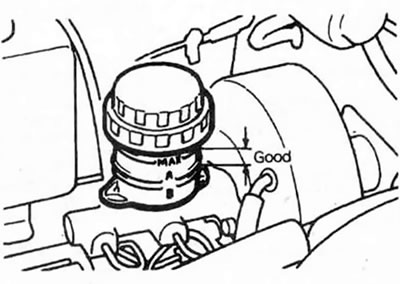
4.19b. On some models the level must be maintained between the MAX and A marks (it must not fall below the B mark)
20. When adding fluid, avoid spilling it on surrounding painted surfaces. Use the specified type of fluid, as mixing different fluids may damage the entire system. See Section "Recommended lubricants and working fluids" at the beginning of this chapter.
Warning: Do not allow brake fluid to come into contact with your eyes or paintwork. Do not use fluid that has been left in an open container for more than a year. Brake fluid absorbs moisture from the air. Excess moisture can dangerously reduce braking performance.
21. At the same time, check the fluid and master cylinder for contamination. If there is sediment, foreign particles or water droplets, the system should be drained and refilled (see section 33).
22. After filling the tank to the required level, check that the lid fits tightly to prevent liquid from leaking.
23. During normal operation, as the brake pads wear, the brake fluid level in the reservoir will gradually decrease. If it is necessary to frequently top up the fluid to maintain the level in the reservoir, this indicates a leak in the system that must be eliminated immediately. Check all brake lines and connections, as well as the working cylinders and booster (for more details see section 16).
24. If, when checking the fluid level in the master cylinder reservoir, you find the reservoir completely or almost empty, then the brake system must be bled (Chapter 9).