



Typical hydraulic brake system
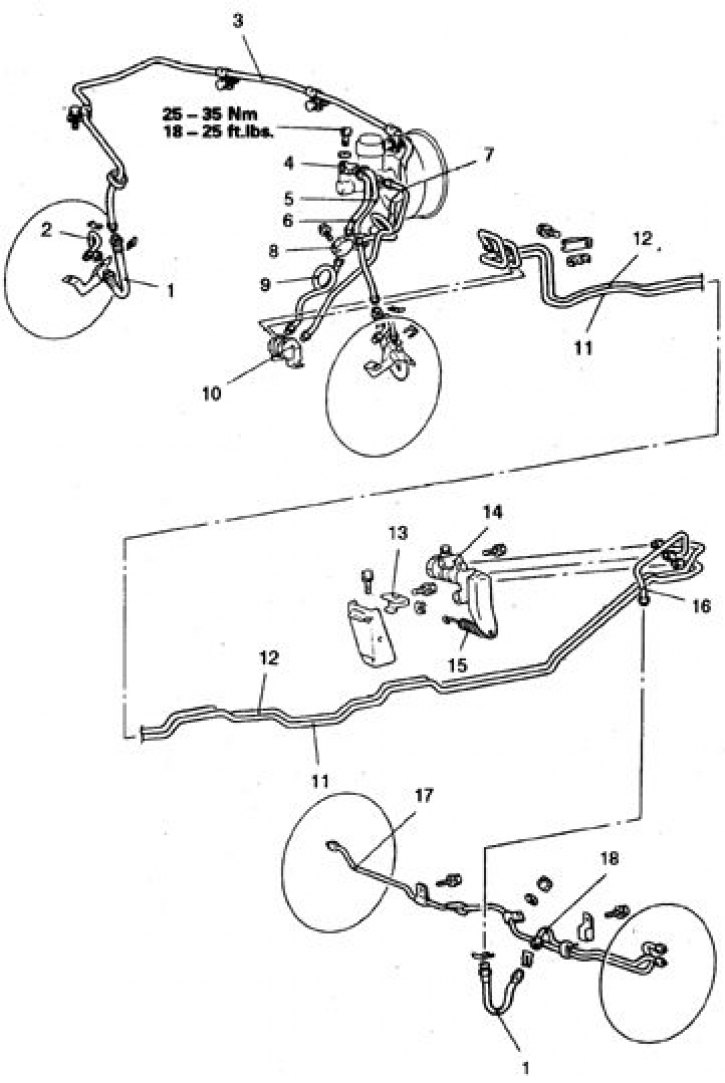
1. Hose; 2, 3, 5, 6, 7, 9, 11, 12, 16, 17, 18. Tube; 4. Connector; 8, 10. Tee; 13. Spring bracket; 14. Pressure regulator; 15. Spring
Cars without ABS system
Procedure for bleeding brakes without ABS
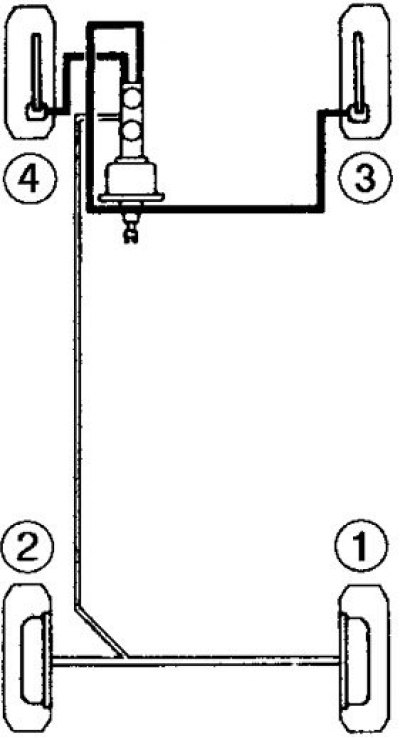
1. Add fluid to the upper mark of the reservoir. When bleeding the brakes, keep the fluid level approximately halfway up the reservoir.
2. If the master cylinder was removed and disassembled, bleed the air from the master cylinder in the following order.
3. Disconnect the front circuit tube from the master cylinder, when the fluid starts to flow out, tighten the tube fitting.
4. Ask an assistant to press and hold the brake pedal.
5. Place a rag underneath, loosen the nipple, tighten the nipple on the tube again and ask the assistant to slowly release the pedal.
6. Repeat the procedure until there are no more air bubbles in the flowing liquid.
7. Similarly, remove air from the part of the cylinder connected to the rear circuit.
8. Remove air from the wheel cylinders in the following order: right rear, left rear, right front, left front. Please do the following.
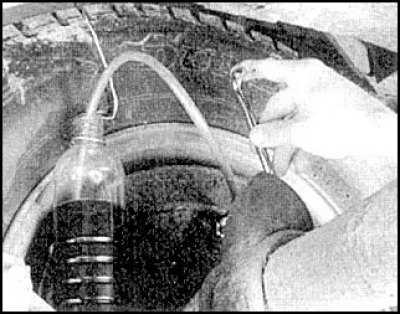
9. Attach a spanner and a transparent hose to the brake bleed nipple, and immerse the other end of the hose in a container with brake fluid.
10. Ask an assistant to press the brake pedal several times, then press and hold.
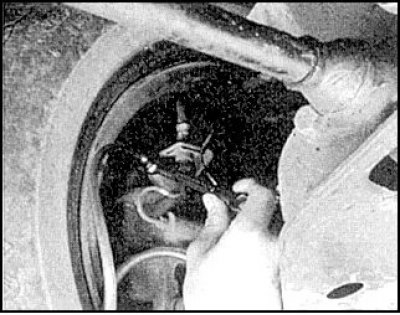
11. Loosen the nipple 1/2–1/4 turn and release the liquid containing air.
12. Tighten the nipple before the pedal reaches the floor (ask your assistant to warn you about this).
13. Repeat the procedure until the liquid flows without bubbles.
14. Similarly, remove air from the remaining wheel cylinders.
15. After removing the air, check the fluid level in the feed tank and, if necessary, top up to the MAX mark.
16. Replace the tank cap.
Cars with ABS system and proportioning valve
Bleeding procedure for brakes
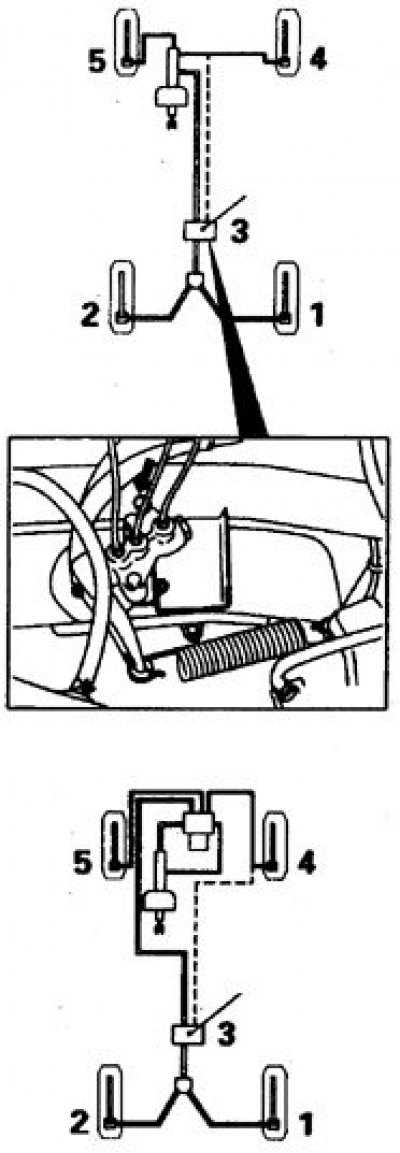
LSPV – metering valve
1. Remove air from the master and wheel cylinders.
2. Then – from the metering valve, connecting the hose to the valve fitting, and the tubes connected to the hydraulic modulating unit.
3. Bleed the volume of the hydraulic module tubes with the engine running.
4. On vehicles with an ABS system, restore the level in the reservoir by adding fluid through the filter. The pumping procedure is no different from that described above.