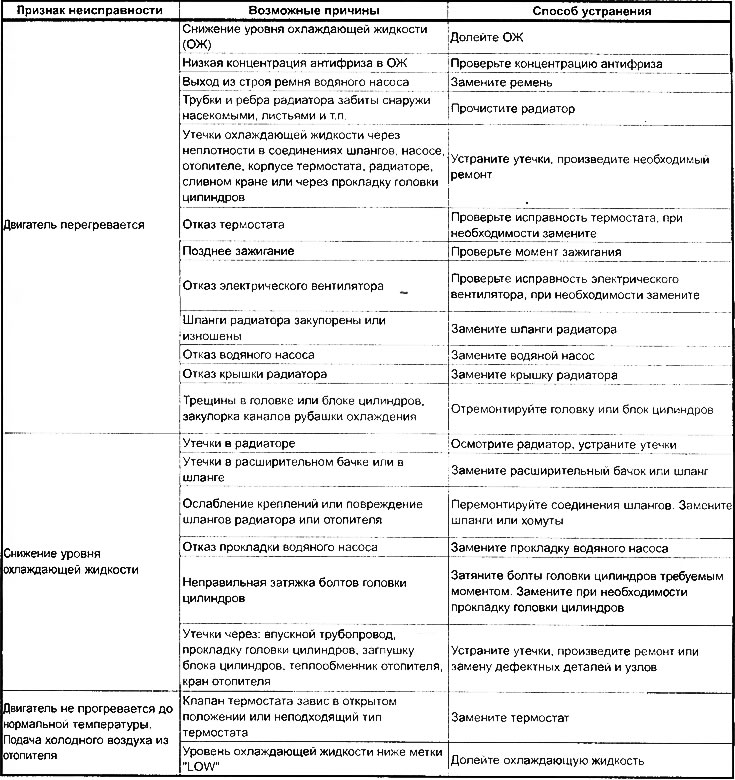
NOTE: Some vehicle models have a different optimum cooling system temperature range. Temperature values are usually marked on the thermostat housing.
Typical faults of the cooling system are leaks and insufficient cooling efficiency of the engine. The first occurs due to damage to the hoses and their connections, the liquid pump seal, damage to the gaskets, cracks, and the second - due to a faulty fan, breakdowns of the water pump, faulty thermostat, internal and external contamination of the radiator as a result of scale formation.
Signs of a faulty cooling system include engine overheating and boiling coolant in the radiator, unless they are the result of prolonged and heavy engine load or improper adjustment of the ignition system or fuel system.
Thermostat Troubleshooting Algorithm
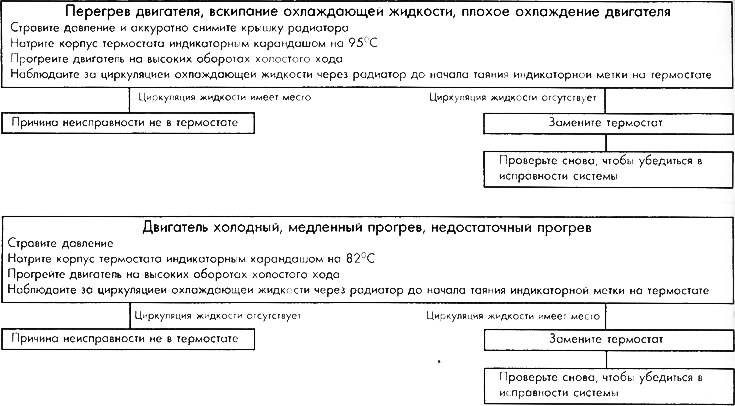
NOTE: The indicator pencil is similar to a regular pencil and contains a material with certain chemical additives that provide a specified melting point. By applying pencil marks at 82°C and 95°C to the thermostat housing, you can check the thermostat response temperature. These marks should melt when the coolant reaches 82°C and 95°C, respectively. These temperatures determine the range of the thermostat response. Therefore, if the circulation does not occur as shown in the diagram, this means that the thermostat may be faulty.