



Note:
- After replacing the battery, the data in the electronic control system of the engine, automatic transmission, etc. will be erased. As a result, unstable engine operation and sudden jerks when shifting gears are possible. If the engine is running unsteadily, an initial engine adjustment should be performed.
- When replacing the battery, the settings stored by the user in the electronic equipment memory may be erased. In this case, you should restore these settings in the order described in the relevant sections.
Checking the electrolyte level in the battery
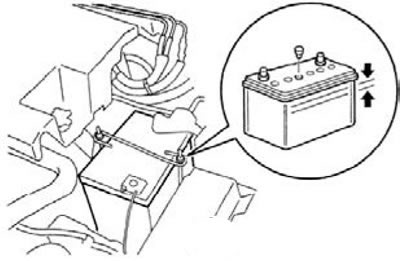
The electrolyte level should be between the marks on the outer surface of the battery. Add distilled water if necessary.
Inside, the battery is divided into several cells. Remove the cap from each jar and add water to the top mark. Do not fill the battery above the upper mark, as splashes of electrolyte leaking out during movement may damage vehicle parts.
The electrolyte level should be checked at least once every 4 weeks, depending on operating conditions.
If the battery is not used, it will discharge over time. Check battery voltage once every 4 weeks; if necessary, recharge it with a small current.
In cold weather
At low temperatures, the battery capacity decreases. This is an inevitable consequence of the chemical and physical processes occurring in it. Therefore, a cold battery, especially one that is not fully charged, provides only a fraction of the normal starting current.
Before starting the engine in cold weather, it is recommended to check the battery and charge or replace it if necessary. This will not only ensure reliable engine starting, but will also extend the life of the battery.
Disconnecting and connecting
To disconnect the battery, turn off the engine. Disconnect the negative (-) cable first, then the positive (+) cable. When connecting the battery, connect the positive (+) cable first, then the negative (-) cable.
Avoid sparks, smoking or open flames near the battery. This could cause it to explode.
Battery electrolyte is a highly corrosive liquid. Do not allow electrolyte to come into contact with your eyes, skin, clothing, or vehicle paintwork. Spilled electrolyte should be washed off immediately with plenty of water. If eye or skin irritation occurs as a result of contact with electrolyte, seek medical attention immediately.
When charging or using the battery in a closed area, ensure adequate ventilation.
Attention:
- Do not disconnect the battery with the ignition key in the ON position, as this may damage the vehicle's electrical equipment.
- It is prohibited to directly short-circuit the battery terminals: this will lead to its overheating and failure.
- When working near a battery, wear protective glasses.
- If you need to quickly charge the battery, you should first disconnect the wires from its terminals.
- To avoid a short circuit, you must first disconnect the negative (-) cable.
- Keep children away from the battery.
Note:
- The battery terminals should be kept clean. After connecting the battery, apply protective grease to the terminals. Use warm water to flush the terminals.
- Make sure the battery is securely fastened and cannot shift while driving. Also check that the terminals are tightened securely.
- If the vehicle will not be used for a long period of time, remove the battery and store it in a place where the electrolyte will not freeze. The battery should be stored fully charged.