



2. Remove all ignition coils and spark plugs.
3. Disconnect the electrical connector from the crankshaft angle sensor (Fig. 2.8)
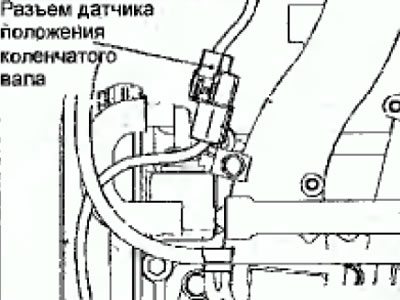
Fig. 2.8. Location of the crankshaft position sensor connector
Note: Disconnecting the connector from the crankshaft position sensor will disable the ignition system and fuel injection system.
4. When turning the crankshaft with the starter, cover all the spark plug holes with a towel or cloth. After turning the crankshaft with the starter, check for impurities stuck to the towel.
Warning
(1) When checking compression, do not stand in front of the spark plug holes.
(2) If coolant, oil, fuel, etc. enters the cylinder during compression measurement (due to cracks), these substances will heat up and be ejected under pressure from the spark plug hole, which may be dangerous.
5. Connect the compression tester to the spark plug hole of cylinder No.1 (Fig. 2.9).
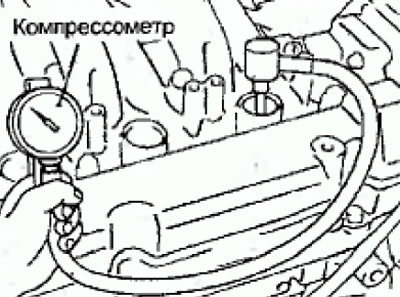
Fig. 2.9. Connecting the compression gauge to the spark plug hole
6. Open the throttle valve and turn the engine crankshaft with the starter. After one or two revolutions, the compression pressure should increase to the maximum mark and then stabilize. Write down the result.
Nominal compression at crankshaft speed 300 min⁻¹: 1720 kPa
Minimum permissible compression at crankshaft speed of 300 min⁻¹: 1462 kPa
7. Check the compression in the remaining cylinders and record the readings. The pressure in all cylinders should be the same or differ by no more than the permissible value.
Permissible difference in compression between engine cylinders: 100 kPa
8. If the pressure in any cylinder is too low, pour a teaspoon of clean motor oil into the cylinder through the spark plug hole and repeat the steps in steps 6 and 7.
(1) If the pressure increases after adding oil, this means that the piston rings and/or cylinder are worn.
(2) If the pressure does not increase, the cause is worn or burnt valves or a blown head gasket. Low pressure in two adjacent cylinders almost always means that the head gasket between them is blown.
9. Connect the connector to the crankshaft position sensor.
10. Screw in the spark plugs and install the ignition coils.
11. Use the MUT-II tool to clear diagnostic trouble codes.
Note: The fault code resulting from disconnecting the connector from the crankshaft position sensor will be cleared.