



Caution: Plugs installed in the engine block cooling passages may be difficult or impossible to remove.
1. Drill a small hole in the center of each plug and remove them with a dent puller (see illustration).
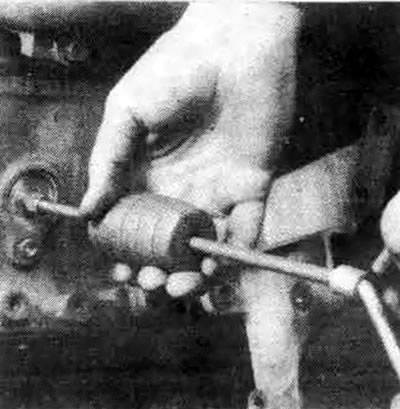
15.1. The plugs should be removed with a puller - if they are sunk into the block, it will be impossible to get them out
2. Using a scraper, remove all traces of gasket from the cylinder block. Be careful not to damage the sealing surfaces.
3. Remove the main bearing caps and remove the bearing shells from the caps and cylinder block. Mark the shells by which cylinder they are from and whether they are from the cap or the block, then set them aside.
4. Remove all threaded plugs from the block oil passages. This is usually difficult - they have to be drilled out and re-threaded. Install new plugs when assembling the engine.
5. If the engine is heavily soiled, it should be steam cleaned or evaporated in a mechanical workshop.
6. Once you have the cylinder block back, clean all the holes and oil passages again. There are special brushes available for this purpose. Rinse the passages with warm water until the water comes out clean, dry the block completely and coat all treated surfaces with liquid anti-corrosion lubricant. If you can use compressed air, use it to speed up the drying and blow out all the holes and passages.
Warning: Wear safety glasses when using compressed air!
7. If the cylinder block is not very dirty, you can clean it with soapy water and a soft brush. Take your time. Regardless of the method used, make sure to clean all the oil passages, dry the block completely, and coat its treated surfaces with liquid lubricant.
8. It is necessary to clean the threaded holes of the block to ensure the correct tightening torque during assembly. Using a suitable tap, remove rust, corrosion, adhesive and oil from the holes and restore the threads with a tap. If possible, use compressed air to clean off chips. Then clean the threads on the cylinder head bolts and main bearing cap bolts.
9. Replace the main bearing caps and tighten their bolts finger tight.
Original material on the website (MitsubishiMan)
10. After coating the sealing surfaces of the new plugs with Pennatex No.2 sealant, install them in the cylinder block (see illustration). Make sure that the plugs are straight and seated securely, otherwise leaks may occur. Special tools are available for this purpose, but a large socket head with an outside diameter that fits into the plug with a small gap, a 13.2 mm extension and a hammer may be suitable.
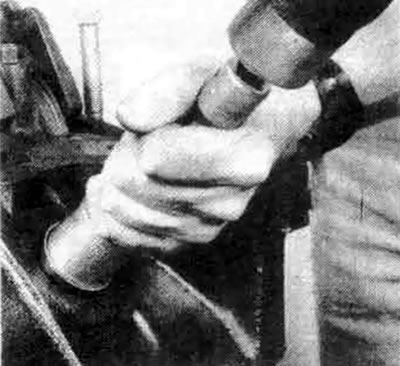
15.10. To install a new plug, you can use a large socket head and extension
11. Apply a non-hardening sealant (such as Pennatex No.2 or Teflon pipe sealant) to the new oil passage plugs and screw them into the cylinder block holes. Check that they are tight.
12. If you are not going to reassemble the engine immediately, cover it with a large plastic cover to keep it clean.