General information
When a vehicle is equipped with a conventional braking system, abruptly pressing the foot brake pedal causes the wheels to lock. This disrupts the tread's grip on the road surface and the vehicle may skid, causing it to lose control. The anti-lock braking system (ABS) prevents premature wheel locking by continuously controlling the speed of the wheels during braking by modulating the hydraulic fluid pressure in each brake mechanism.
The ABS electronic control unit (ECU) monitors the rotation speed of each of the vehicle's wheels, based on signals from the wheel sensors. When any of the wheels begins to lock prematurely during emergency braking, the ECU issues a command to activate the electromagnetic valve located inside the hydraulic modulator, which, when triggered, opens the corresponding section of the brake circuit, releasing some of the hydraulic fluid from it into the reservoir and, accordingly, reducing the operating pressure. As soon as the wheel rotation speeds are equalized, the valve closes again and the pressure continues to rise. The cycle lasts a fraction of a second on each wheel and is repeated until braking is complete. The design of the system allows for the pressure in the hydraulic circuits of each of the four wheels to be adjusted. In reality, the ABS operating scheme is much more complex than it may seem, so the authors of this Manual do not recommend that car owners attempt to repair the system themselves. In the event of a malfunction, it would be wiser to contact a car service specialist.
Diagnostics of failures and trouble codes
If the ABS warning light mounted in the vehicle's dashboard lights up and remains on while driving, first make sure that the parking brake is fully released and the brake system is functioning properly. If everything is normal, then the ABS has failed. Remember that the ABS warning light may be triggered by a drop in the brake fluid level in the brake master cylinder reservoir - the brake system warning light will also come on at the same time. A constant loss of brake fluid, not related to wear of the brake pad friction linings, indicates leaks in the hydraulic circuit:
- a) Check the condition of the brake calipers and wheel cylinders;
- b) Check hydraulic system components for signs of developing leaks;
- c) Check the condition and reliability of the fastening of the contact connectors of the ECU wiring and wheel sensors (see Chapter On-board electrical equipment);
- d) Check the relevant fuses (see Chapter On-board electrical equipment).
The ABS control module (ECU) monitors any malfunctions of the system components. If a malfunction is detected, the corresponding indicator lamp lights up on the instrument panel and the anti-lock brake system is disabled. A fault code is recorded in the control module's memory.
Note: When the ignition is turned on, the ABS indicator light will flash twice (FWD models) or four times (AWD models) for 1 second and then turn off.
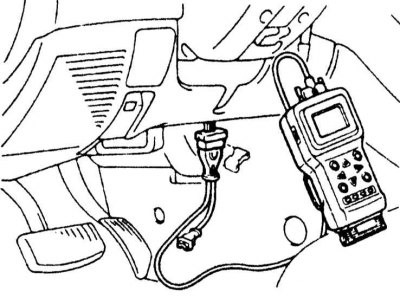
If no faults are found during independent checks, take the car to a service station. Full diagnostics of ABS requires the use of a special reader type DRB-II or MUT-III, connected to the diagnostic connector DLC located on the left under the instrument panel.
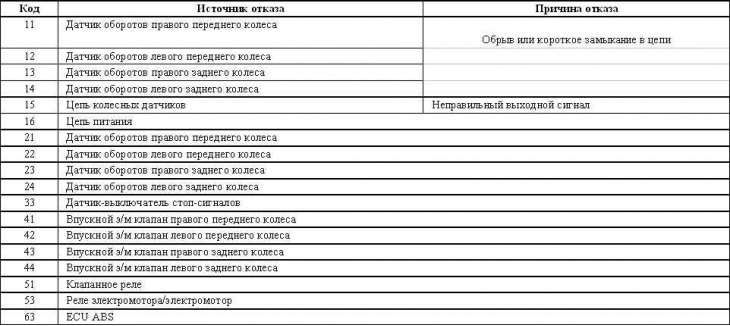
List of ABS fault codes
Diamante models 1992÷1996.
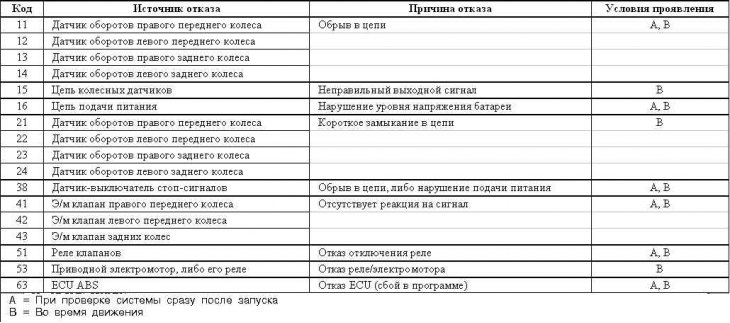
Diamante models since 1997.
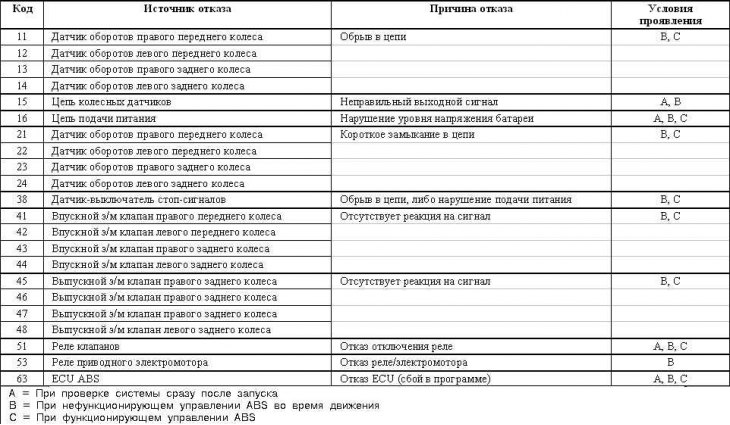
Galant models up to 1993.

Galant models 1994÷1998.
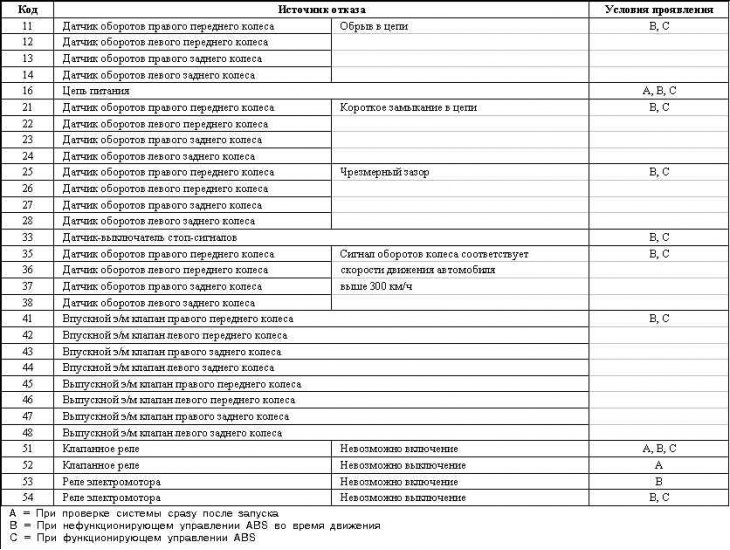
Galant models since 1999.
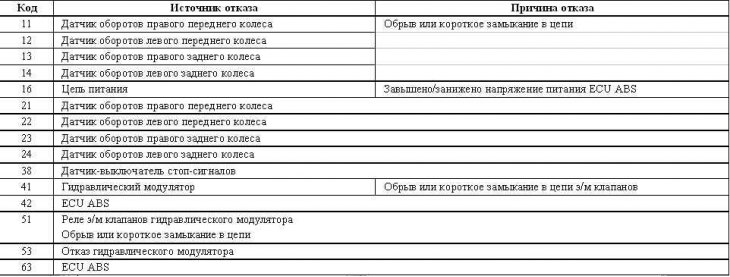
Mirage models 1993÷1996.
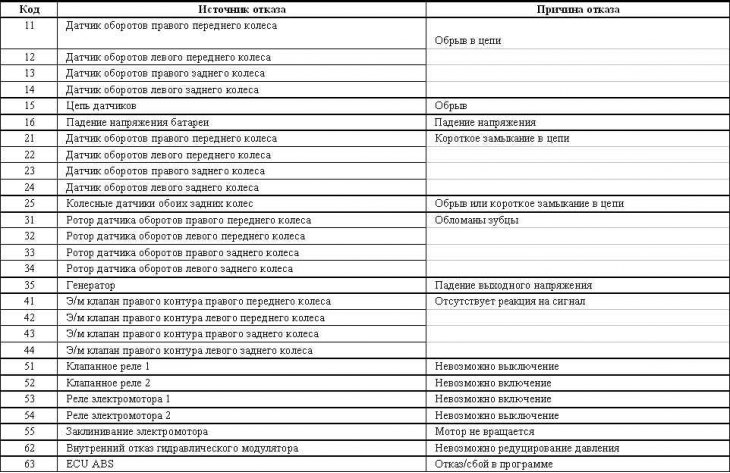
Mirage models since 1997.