



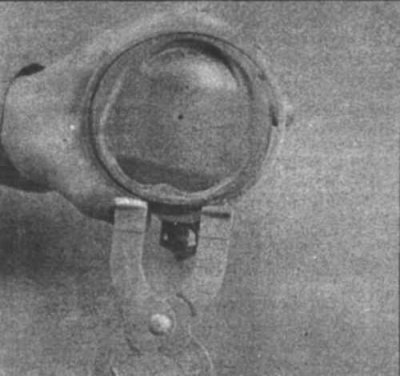
18.1 Use a special tool to remove piston rings
1. Carefully remove the rings from the pistons (18.1), being careful not to scratch the pistons.
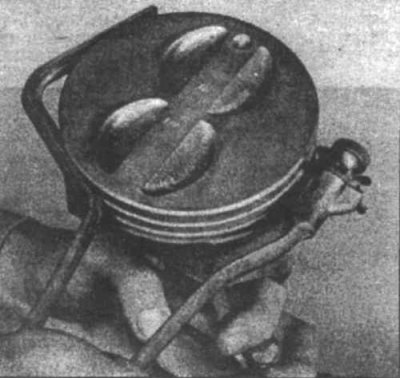
18.2a The piston grooves can be cleaned using a special tool
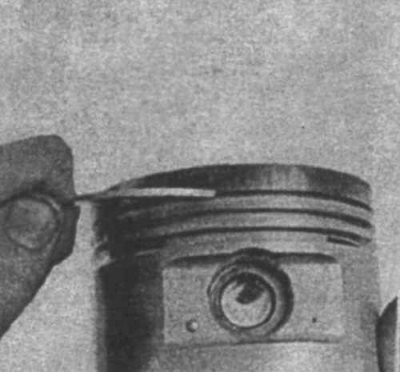
18.2b...or a ring fragment
2. Remove traces of carbon from the piston head. Clean the piston ring grooves (18.2a and 18.2b).
3. After removing carbon and deposits, clean the pistons and connecting rods with solvent and dry them.
4. Inspect the pistons for cracks in the piston skirt, around the piston pin and piston ring grooves.
5. Inspect the piston for scratches, corrosion or burnt areas.
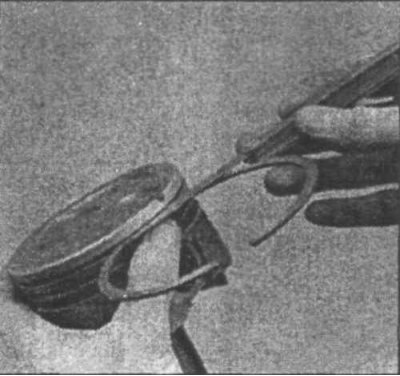
18.6 Check the ring side clearance in several places using a set of feeler gauges
6. Measure the side clearance of the piston rings at several points (18.6).
(The text of the article was taken from the website mitsubishiman)
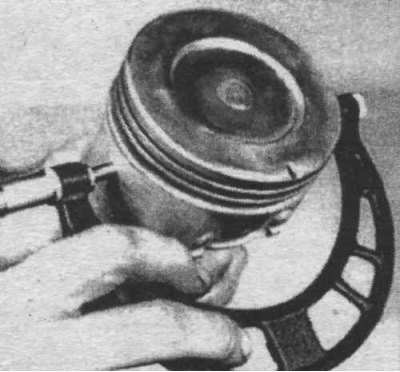
18.7 Measure the piston diameter perpendicular to the piston pin and parallel to it
7. Determine the clearance between the piston and the cylinder walls by subtracting the cylinder diameter from the piston diameter. Measure the piston diameter 2 mm above the lower edge of the piston, perpendicular to and parallel to the piston pin (18.7). If the clearance is too large,
8. Check the clearance between the piston and connecting rod by tilting the piston on the connecting rod. If excessive free play is felt, have the piston and connecting rod rebored and a new piston pin installed.
9. If the piston needs to be removed from the connecting rod, contact a specialist.
10. Inspect the connecting rods for cracks or other damage. Remove the connecting rod caps, clean them, and inspect them for scratches. Replace the bearing shells and reinstall the caps.