



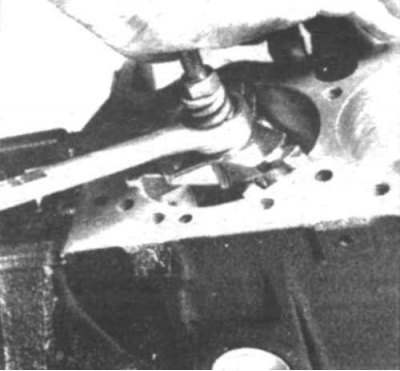
13.1 A special tool is required to remove the shoulder at the top of the cylinder - remove the shoulder before removing the piston
1. Check for the presence of a ledge at the top of the cylinder and remove it before removing the piston (13.1).
2. Turn the engine over.
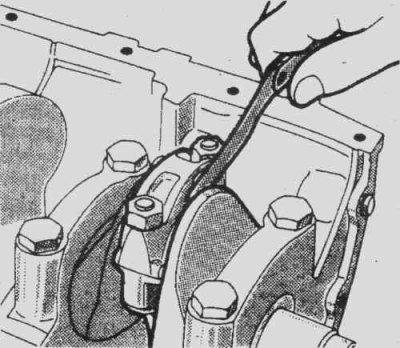
13.3 Check the connecting rod axial play using a feeler gauge
3. Check the axial play of the connecting rods using a set of feeler gauges (13.3). If it is too large, the connecting rod must be replaced. If it is too small, contact specialists to turn the connecting rod or crankshaft.
4. Mark the connecting rods and connecting rod caps.
5. Unscrew the cap nuts by half a turn, unscrew and remove them. Remove the connecting rod cap of the first cylinder and the liner.
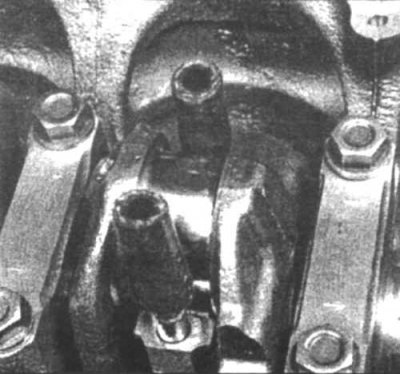
13.6 To protect the cylinder walls and crankshaft journal, place sections of rubber hose on the connecting rod bolts before removing the connecting rod
6. Place sections of rubber or plastic hose on the cover mounting bolts to avoid damaging the cylinder walls and crankshaft journal when removing the connecting rod (13.6).
7. Remove the upper bearing shell and lift the piston and connecting rod out from the top of the engine.
8. Remove the remaining connecting rods and pistons in the same manner.
9. After removing the connecting rods, install the liners and covers in place and lightly tighten the mounting nuts.
10. Do not remove the pistons from the connecting rods.