



Contents: Main vacuum chamber ⤓ Ignition Timing Control Using a…⤓ Throttle opening system ⤓ Air conditioning control system (for…⤓ Cold mixture heater ⤓ Electric automatic suction system ⤓
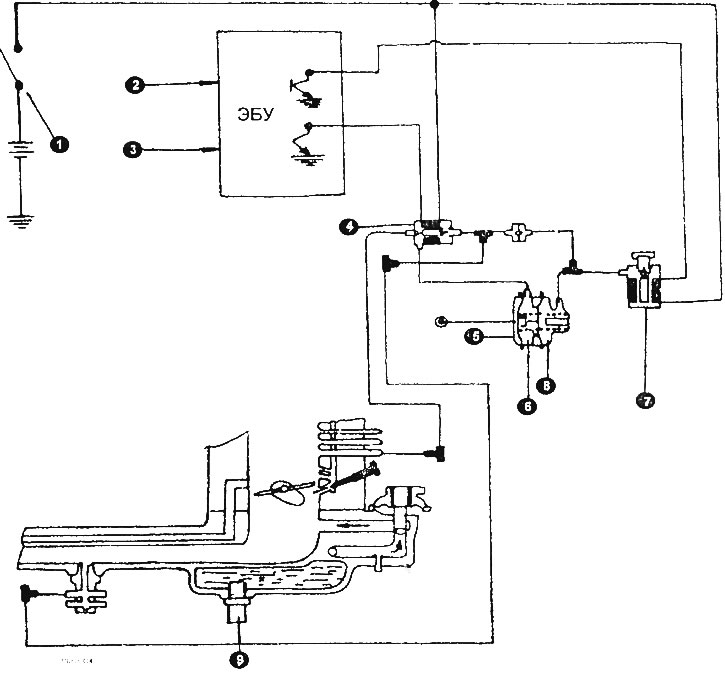
Spark advance control system diagram
1 - ignition switch; 2 - engine speed sensor; 3 - coolant temperature sensor; 4 - electromagnetic valve for ignition timing control; 5 - vacuum acceleration of ignition timing; 6 - main vacuum chamber; 7 - electromagnetic valve for ignition timing control; 8 - subvacuum chamber; 9 - engine coolant temperature sensor.
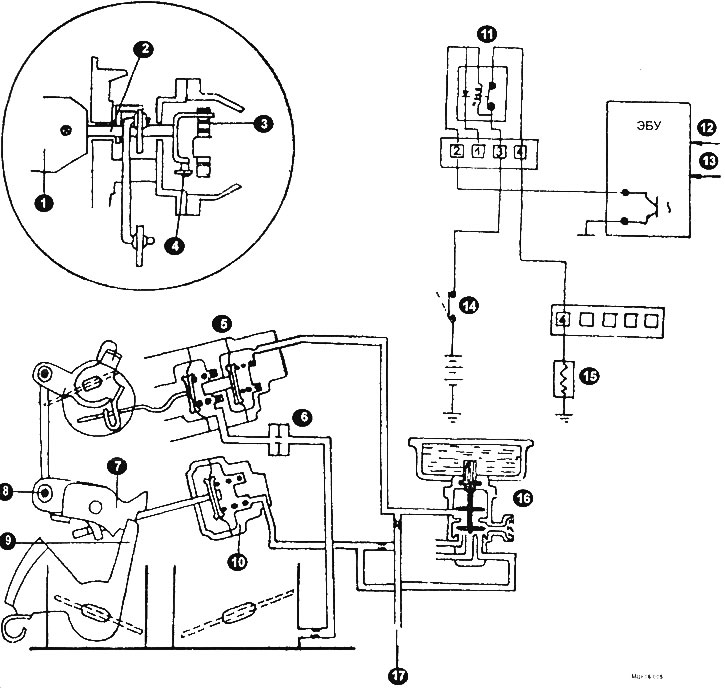
Carburetor Wiring Diagram
1 - suction valve; 2 - roller; 3 - bimetallic element; 4 - lever; 5 - suction breaker; 6 - delay valve; 7 - fast idle mode cam; 8 - thrust lever; 9 - lever; 10 - suction opener; 11 - Automatic suction relay; 12 - engine speed sensor; 13 - Engine coolant temperature sensor; 14 - ignition switch; 15 - Electric suction heater; 16 - thermostatic control valve; 17 - intake manifold hose.
The distributor vacuum corrector has a two-membrane design with a vacuum and subvacuum chamber. In order to regulate the ignition timing, the ECU excites the electromagnetic valves in the corresponding vacuum circuits of the main vacuum chamber and subvacuum chamber.
Main vacuum chamber
When the engine speed is close to idle speed (1200 rpm or less), the ECU energizes the spark advance solenoid valve.
This connects the carburetor intake manifold to the main vacuum chamber, which switches the ignition timing (the vacuum pressure in the tube is zero when the valve is in the idle position, and increases with its opening angle.
When the engine speed increases to 1200 rpm, the ECU closes the electromagnetic valve of ignition advance regulation. In this case, the vacuum of the intake manifold is directed to the main vacuum chamber, increasing the ignition timing advance (coolant temperature below 80°C), the electromagnetic valves are excited, which allows the vacuum pressure from the intake manifold tube to reach the main vacuum chamber.
Ignition Timing Control Using a Sub-Chamber
When the engine coolant temperature is low (50°C or lower), the ECU excites the cold solenoid valve for adjusting the ignition timing. As a result, the vacuum from the intake manifold is no longer directed to the atmosphere, but instead to the sub-vacuum chamber. As a result, the ignition timing is further increased by a constant angle (5°) via the main vacuum chamber.
When the engine warms up, or when the coolant has a high temperature (above 50°C), the ECU reduces the excitation of the ignition timing control valve. As a result, the vacuum from the intake manifold connects with the atmosphere, which prevents the ignition timing from advancing.
Throttle opening system
When the vacuum switch of the power steering system is turned off by the high pressure of the pump, the solenoid valve of the throttle opening control is excited. As a result, the vacuum from the intake manifold is sent to the throttle opener. The throttle opens slightly, preventing the engine speed from dropping due to the load from the control system. If the engine speed drops below the set value (1200 rpm), the ECU maintains the power transistor. When the electrical load switch is turned on by turning on the headlights, the solenoid valve of the throttle opening control is excited, sending the vacuum of the intake manifold to the throttle opener to deflect the throttle slightly, preventing the engine speed from dropping due to the electrical load.
Air conditioning control system (for models with automatic transmission)
Original material on the website MitsubishiMan.ru
When the throttle opening increases (at a coolant temperature of 74°C) during acceleration, the ECU turns off the air conditioner power relay for about 5 seconds. As a result, even when the air conditioner switch is on, the compressor is turned off, which reduces the engine load, improving acceleration efficiency.
Cold mixture heater
This device is a thermistor heater with an additional coefficient of temperature resistance, installed between the carburetor and the intake manifold. If the coolant temperature is below 60°C, the ECU excites the cold mixture relay. The cold fuel-air mixture is heated before being fed into the combustion chamber in order to improve the combustion process.
Electric automatic suction system
This system in the carburetor provides heating of the bimetallic suction spring by an electric heater. After the engine is started, the spring heats up, as a result of which the bimetallic element gradually opens the suction valve by means of a thermal expander and presses down the stop lever. The lower the temperature during the engine start, the tighter the suction valve closes, facilitating the engine start.