



Contents: Examination ⤓ Repair ⤓
Examination
1. Using a thin ruler and a measuring gauge, check the deformation of the upper part of the cylinder block (Figure 2.50). It is important that the surfaces are thoroughly cleaned of gasket residue and other contaminants. Normal deformation: 0.05 mm. Permissible deformation: 0.1 mm.
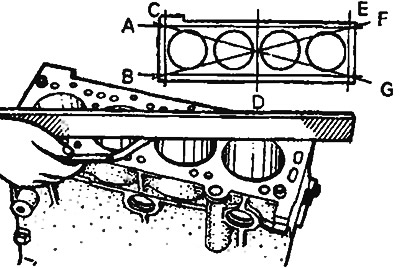
Fig. 2.50. Checking the cylinder block deformation
2. If there is excessive deformation, the cylinder block must be ground within acceptable limits or replaced with a new one. The height of the new cylinder block: 255.9-256.1 mm.
3. Check the cylinder walls for scratches and burrs. If defects are found, the cylinder block is repaired (ground to repair size) or replaced with a new one.
4. Using a measuring gauge, measure the inner diameter of the cylinders and their cylindricity (Figure 2.51). If excessive wear occurs, repair the cylinders and replace the pistons and piston rings with new ones.
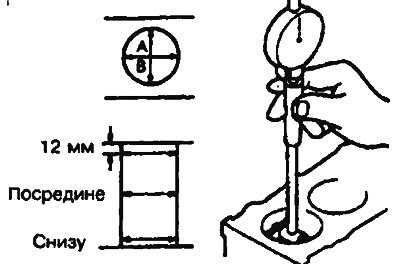
Figure 2.51. Checking the cylinder diameter
Cylinder diameters:
- Engine 4G16:68.20-68.23 mm.
- Engine 4G13, G13B: 71.00-71.03 mm.
- Engine 4G15, G15B: 75.50-75.53 mm.
Repair
5. The repair size of the pistons used is determined on the basis of the largest measured internal diameter of the cylinder.
Determining the appropriate piston size:
| Size | Correspondence |
| 1st repair size | 0.25 mm |
| 2nd repair size | 0.50 mm |
| 3rd repair size | 0.75 mm |
| 4th repair size | 1.00 mm |
Attention! The corresponding size is indicated on the piston bottom.
6. Measure the outside diameter of the piston used, namely in position A in the direction of the pressure produced (Figure 2.52).
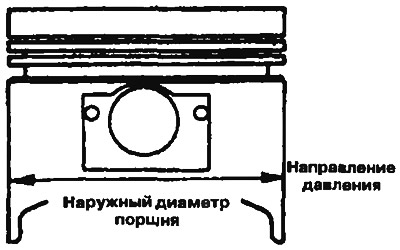
Figure 2.52. Checking the piston diameter
7. Based on the measured piston outside diameter, calculate the finished diameter. Finished diameter = piston outside diameter + clearance between piston outside diameter and cylinder - 0.02 mm (lapping tolerance).
8. Bore the cylinders to the calculated diameter.
Caution! To avoid distortion due to increased temperature during cylinder repair, cylinders must be ground in the following order: No.2, No.4, No.1 and No.3.
9. Grind to the calculated value (outer diameter of the piston + gap between the outer diameter of the piston and the cylinder).
10. Check the clearance between the piston and the cylinder, which should be 0.03-0.05 mm.
Caution! When repairing cylinders, make sure that all cylinders are lapped to the same value. Therefore, never repair only one cylinder.