
English Русский
Български
Беларускі
Український
Српски
Hrvatski
Română
Polski
Slovenský
Magyar
Articles Bookmark Contacts Sitemap   
Company Audi Company Ford Company Hyundai Company Kia Company Mazda Company Mercedes-Benz Company Nissan
MitsubishiMan.ru


Home Colt Lancer Galant L200 Outlander Pajero Others
Pajero 4 (2006-2021) Pajero 1 and 2 (1982-1999)

Removal air from hydraulic compensators (Mitsubishi Pajero 4)

  • Home
  • Pajero
  • 4 (2006-2021)
  • Power unit
  • Engine repair
  • Removal air from hydraulic compensators
0
Note:
  • If the vehicle has been parked on a slope for an extended period of time, the amount of oil in the hydraulic lifters will decrease and air may enter the high pressure chamber of the hydraulic lifters.
  • If the car has not been used for a long time, the oil may also leak out of the oil channels, so some time is needed to fill the cavities of the hydraulic compensators and remove air from them.
  • If any of the above situations occur, extraneous noise can be eliminated by removing air from the hydraulic lifters.


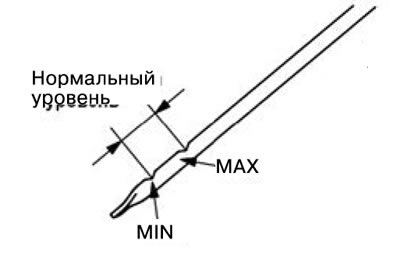
1. Check the oil level in the engine crankcase and its quality, replace or add the required amount if necessary.

Note:
  • If there is not enough oil in the engine crankcase, air can enter the oil passages through the oil intake.
  • If there is more oil in the crankcase than normal, the oil in the crankcase foams and a large amount of air is mixed into the oil.
  • As the oil ages, the air stirred into the oil cannot be easily separated from it, and its amount in the oil constantly increases.
  • If, due to one of the above reasons, there is a large amount of air in the oil and it enters the high-pressure chamber of the hydraulic compensator, the air inside the hydraulic compensator is compressed when the valve opens and the hydraulic compensator is also compressed, resulting in abnormal noise when the valve closes. That is, the same thing happens when too large a thermal clearance is mistakenly set in the valve mechanism drive. If you remove air from the cavities of the hydraulic compensators, their operation is restored.

The text of the article was obtained from the website www.mitsubishiman.ru


2. Let the engine idle for 1-3 minutes to allow it to warm up.

3. Without putting any load on the engine, perform the engine acceleration and deceleration procedure shown in the figure several times until the abnormal noise disappears (usually the noise disappears after 10-30 cycles, but if the noise does not disappear even after 30 cycles, then the reason is not the presence of air in the hydraulic compensators).

4. After the noise disappears, repeat this acceleration-braking procedure about 5 more times.

5. Let the engine idle for another 1-3 minutes to make sure there is no abnormal noise.
This article is available at: russian, bulgarian, belarusian, ukrainian, serbian, croatian, romanian, polish, slovak, hungarian
This article was reviewed by: Miroslav Rakov
Share with friends:
◀ Previous
Pajero 4: Engine repair
Next ▶

Simple check of hydraulic compensators
Checking hydraulic compensators
Checking the vacuum in the intake manifold
Compression check
Checking the air-fuel mixture composition at idle
Removal the crankshaft pulley
Installing the crankshaft pulley
Removal the camshaft
Installing the camshaft and camshaft seal
Removal the oil pan and oil filter
Similar materials for other Mitsubishi models

➤ Rocker arms and hydraulic tappets of 12-valve engine —… Mitsubishi Colt 4 and 5 (1991-2003)
➤ Checking hydraulic compensators Mitsubishi Lancer 9 (2000-2007, petrol)
➤ Bleeding air from the hydraulic circuit of the clutch… Mitsubishi Galant 6 and 7 (1987-1998)
➤ Replacing brake fluid and bleeding air from the hydraulic… Mitsubishi L200 4 (2005-2014, diesel)
➤ Checking the level of working fluid in the clutch hydraulic… Mitsubishi Outlander 1 (2003-2008)
➤ Hydraulic valve clearance compensators (DOHC) Mitsubishi Carisma (1995-2004)
Link in different formats to this article
Comments and feedback from visitors
No comments yet


Add up two numbers 24 + 31


Pajero 4 (2006-2021) 
  • General information
  • User manual
  • Troubleshooting
  • Maintenance
  • Technical specifications
  • Power unit
  • Engine repair
  • Cooling system
  • Lubrication system
  • Fuel system
  • Engine management system
  • Intake and exhaust system
  • Engine electrical equipment
  • Transmission
  • Clutch
  • Manual gearbox
  • Automatic gearbox
  • Drive shafts
  • Chassis and running gear
  • Front suspension
  • Rear suspension
  • Brake system
  • Steering
  • Body and interior
  • Exterior (external elements)
  • Interior (internal elements)
  • Doors, locks and windows
  • Body dimensions
  • Electrical equipment
  • Safety system (SRS)
  • Air conditioner
  • Equipment and devices
  • Electrical diagrams
Pajero 1 and 2 (1982-1999) 
  • General information
  • User manual
  • Seats and seat belts
  • Instruments and controls
  • Driving and operation
  • Maintenance
  • Power unit
  • Gasoline engines
  • Diesel engines
  • Ignition system
  • Engine electrical equipment
  • Cooling and lubrication system
  • Power and exhaust system
  • Fuel system (gasoline)
  • Fuel system (diesel)
  • Transmission
  • Clutch
  • Mechanical gearbox
  • Automatic gearbox
  • Drive shafts and axles
  • Chassis and running gear
  • Front suspension
  • Rear suspension
  • Steering
  • Brake system
  • Body and interior
  • Exterior (external elements)
  • Interior (internal elements)
  • Doors, locks and windows
  • Electrical equipment
  • Equipment and devices
  • Heater and air conditioner
  • Cruise control
  • Headlights and lighting
  • Electrical circuits
MitsubishiMan.ru © 2018–2026 • Mobile version • Articles about Mitsubishi • Contacts • Sitemap: EN BG BY UA RS HR RO PL SK HU • Site search • Bookmark
Colt 2 and 3 (1983-1993) · Colt 4 and 5 (1991-2003) · Colt 5 (1995-2003) · Lancer 3 and 5 (1984-1992) · Lancer 9 (2000-2007) · Galant 5 (1983-1989) · Galant 6 and 7 (1987-1998) · L200 4 (2005-2014) · Outlander 1 (2003-2008) · Pajero 1 and 2 (1982-1999) · Pajero 4 (2006-2021) · Carisma (1995-2004) · Space Star (1998-2005) ·
This resource sets cookies 🍪 to avoid bothering you with repeated data entry.