Disconnect the ground cable from the battery.
Drain the coolant.
Remove all parts that restrict access to the thermostat housing (see pictures).
Unscrew the bolts and remove the thermostat pipe (2) (possibly with the hose (1) - if removal is difficult).
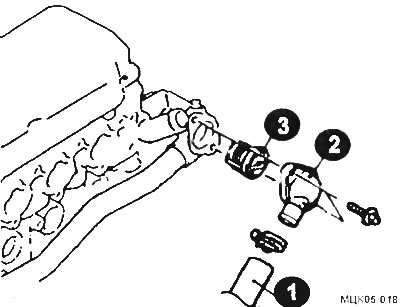
Remove the thermostat and inspect it for integrity of external and internal elements.
Hang the removed thermostat together with the thermometer in a pan of cold water so that they do not touch the walls or bottom.
Heat the water, stirring it gently. Note when the thermostat starts to open and compare this temperature with the technical data (82°C).
If the thermostat opens too early, replace it. Continue heating the water until the thermostat opens fully (at 95°C), then let it cool. If the thermostat does not open fully in boiling water or does not close when the water cools, it should be replaced.
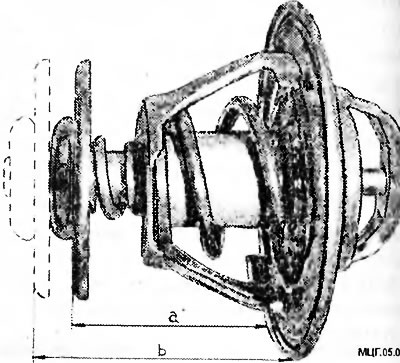
The opening stroke should be 8 mm (b - a = 8 mm).
ATTENTION: It is prohibited to operate the car without a thermostat even at high ambient temperatures, since without a thermostat the engine warms up for a very long time and operates at a low coolant temperature. As a result, the intensity of wear of the main engine parts increases, and there is an intensive deposition of resinous substances on the internal walls of the engine.
The thermostat is stopped in the reverse order of removal, taking into account the following:
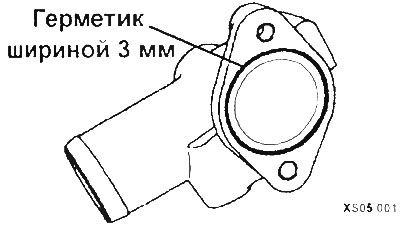
When installing thermostat covers, use sealant.
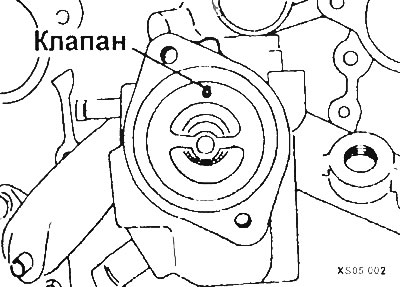
The valve in the thermostat must be located on top during installation.