



Contents: Air conditioner switch ⤓ Fan mode switch ⤓ Air temperature control knob ⤓ Selecting a ventilation mode ⤓ Air ventilation mode selection switch ⤓ Footwell heating ⤓ Combination of hot and cold air ⤓ Eliminating fogging of the…⤓ Fast defogging (fast heating) of…⤓ Supply of outside air into the cabin ⤓ Cooling (for cars with air…⤓
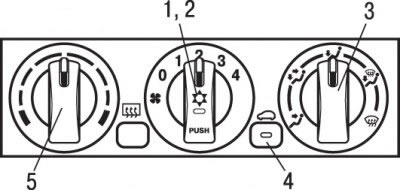
Fig. 1.43. Heater/air conditioner controls: 1 – air conditioner switch; 2 – fan mode switch; 3 – ventilation mode selection handle; 4 – ventilation mode selection switch; 5 – air temperature control handle
The air conditioner and heater can only operate when the engine is running. The heater's performance is directly related to the engine coolant temperature, so turn on the heater after the engine has warmed up well. The air flow is changed using the fan speed control knob 2 (Fig. 1.43).
Air conditioner switch
When the fan is on, press the switch - conditioned air will start flowing into the cabin (in cooling/drying mode), and the air conditioner indicator light will light up. Pressing the switch again will turn off the air conditioner.
Note: Initially, mist may come out of the ventilation system deflectors. This is the result of the sudden cooling of moist air.
Caution! When the air conditioner is running, the idle speed increases slightly. If you have stopped the car, fully depress the brake pedal to prevent it from moving slowly. This precaution is especially important for cars with automatic transmission.
Fan mode switch
To adjust the air flow, you can select one of four fan speeds. The fan mode is set by turning the switch clockwise or counterclockwise. Under normal conditions, you should set the first or second speed.
Air temperature control knob
The heater is off when the handle is turned all the way to the left. To increase the air temperature, turn the handle to the right.
Note: If the engine coolant temperature is low, the temperature of the air supplied to the passenger compartment will not increase even if the air temperature control knob is turned to the high temperature side.
Selecting a ventilation mode
The deflectors/nozzles of the ventilation system from which air is supplied depending on the choice of ventilation modes are shown in Table 1.1.
Designations:
- А - from the windshield and side window deflectors;
- В - from central and side deflectors;
- С - from under the dashboard;
- D - from under the front seats.
Main directions of air flows (ventilation modes):
 To the head area. The air flow enters the upper part of the car interior.
 To the foot/head area. Air is directed to the upper part of the car interior and to the foot area.
 To the leg area. Air enters the leg area only.
 To the foot area/to the windshield and side window heating deflectors. Air flows to the foot area, windshield and door windows.
 To the windshield and side window heating deflectors. Air is supplied only to the windshield and door windows of the vehicle.
Table 1.1 Ventilation system deflectors/nozzles from which air is supplied depending on the choice of ventilation modes
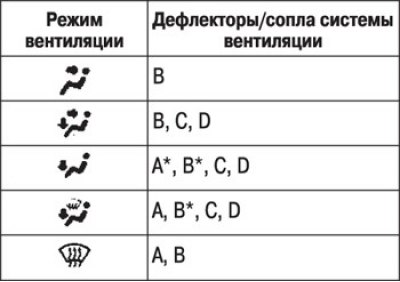
* Indicates weak air flow.
Note: Air is always supplied from the central and side vents, regardless of the position of the ventilation mode selection knob.
Air ventilation mode selection switch
Each time this switch is pressed, the ventilation mode changes between the outside air intake mode and the recirculation mode. In the recirculation mode, the indicator lamp lights up.
Note: The outside air intake mode is typically used to quickly clear moisture or ice from the windshield and side windows and keep them clear.
The recirculation mode should be selected when intensive cooling of the interior air is required, as well as if the outside air is heavily dusty or polluted.
In this case, you should periodically turn on the outside air intake mode to avoid fogging of the windows.
Footwell heating
Set the ventilation mode selection knob and the air intake mode selection switch А to the positions shown in Fig. 1.44. Adjust the temperature by turning the temperature control knob clockwise or counterclockwise. Select the desired fan speed.
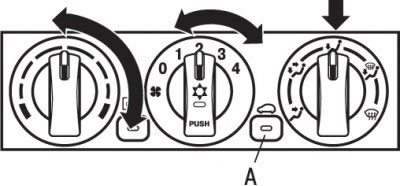
Fig. 1.44. Location of the ventilation mode selection button (A) and the position of the handles in the footwell heating mode
Note: For maximum heat, set the fan mode switch to speed three.
Combination of hot and cold air
Set the ventilation mode selection knob and the air intake mode selection switch А to the positions shown in Fig. 1.45. The air flow will be directed towards the feet and the upper part of the passenger compartment. Select the desired fan speed.
Warm air is supplied to the feet, and cold or slightly heated air is supplied to the upper part of the cabin.
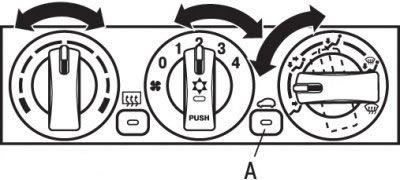
Fig. 1.45. Location of the button (A) for selecting the ventilation mode and the position of the handles in the mode of supplying a combination of heated and cold air
Eliminating fogging of the windshield and door windows
To remove frost or condensation (fogging) from the windshield or door windows, set the ventilation mode selection knob to the position
 or
or  (Fig. 1.46).
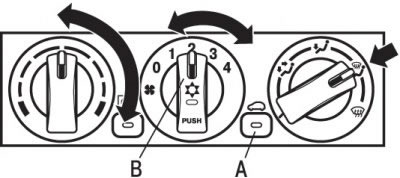
Fig. 1.46. Location of buttons (A) for selecting the ventilation mode, turning on the air conditioner (B) and the position of the handles in the windshield and door glass defogging mode
 Heating the foot area and removing fog from the windshield and door windows (recommended when driving in rain or snow).
1. Set the ventilation mode selection knob А (see Fig. 1.46) to the position of outside air intake.
2. Set the air intake mode selection switch to the position

3. Set the required fan speed.
4. Adjust the temperature.
5. Press the air conditioner switch В (for vehicles equipped with air conditioning).
Fast defogging (fast heating) of glass
To quickly remove fogging (quickly heat) the glass, follow these steps.
1. Set the ventilation mode selection knob А (Fig. 1.47) to the position of outside air intake.
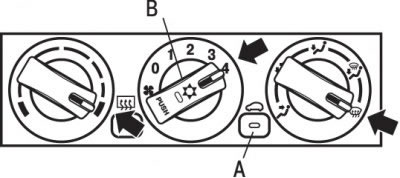
Fig. 1.47. Location of buttons (A) for selecting the ventilation mode, turning on the air conditioner (B) and the position of the handles in the fast defogging (fast heating) mode of the glass
2. Set the air intake mode selection switch to the position

3. Adjust the fan speed to the maximum fan speed.
4. Adjust the temperature by setting the air temperature control knob to maximum.
5. Press the air conditioner switch B (for vehicles equipped with air conditioning).
Note: To effectively remove fog from the windows, direct the air flow from the side vents to the door windows and close the center vents.
Note: Do not set the air temperature control knob to a position close to the maximum cooling position. Cool air will be blown onto the door windows and condense (fog).
Supply of outside air into the cabin
To supply outside air to the cabin in hot weather, set the air intake mode selection switch А to the outside air intake mode and the air temperature control knob to the positions shown in Figure 1.48. Make sure that the temperature control knob is set to the left stop. Select the required fan speed.
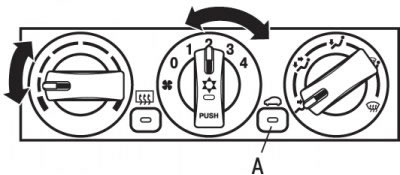
Fig. 1.48. Location of the button (A) for selecting the ventilation mode and the position of the handles in the mode of supplying outside air to the vehicle interior
Turn the ventilation mode selection knob clockwise and the air flow will be directed to the feet and windshield.
Cooling (for cars with air conditioning)
Set the ventilation mode selection knob to the position
 . Switch А (Fig. 1.49) set the outside air intake mode and press the switch В air conditioner.
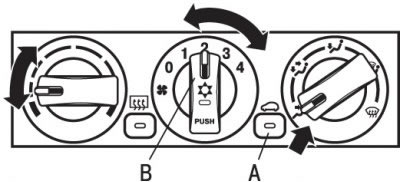
Fig. 1.49. Location of buttons (A) for selecting the ventilation mode, turning on the air conditioner (B) and the position of the handles in the cooling mode (for cars with air conditioning)
Adjust the temperature by turning the air temperature control knob clockwise or counterclockwise.
Select the required fan speed.
Note: If the outside air is dusty, extremely polluted, or if you want to cool the air in the car quickly, set the air intake mode selector switch to the recirculation position and turn the temperature control knob all the way to the left. Periodically switch to the outside air intake mode to prevent moisture from condensing on the windows.