
English Русский
Български
Беларускі
Український
Српски
Hrvatski
Română
Polski
Slovenský
Magyar
Articles Bookmark Contacts Sitemap   
Company Audi Company Ford Company Hyundai Company Kia Company Mazda Company Mercedes-Benz Company Nissan
MitsubishiMan.ru


Home Colt Lancer Galant L200 Outlander Pajero Others
Carisma (1995-2004) Space Star (1998-2005)

Checking the ignition timing angle of the 4G1 engine (Mitsubishi Space Star)

  • Home
  • Mitsubishi
  • Space Star (1998-2005)
  • Power unit
  • Petrol engines 4G1
  • Checking the ignition timing angle of the 4G1 engine
0
1. Prepare the vehicle for testing (warm up the engine to operating temperature).

2. Insert a paper clip from the wire side into contact 1 of the tachometer connector (Fig. 3.9).
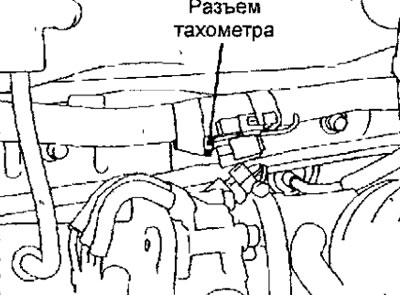


Fig.3.9. Location of the tachometer connector


3. Connect the tachometer wire to the paper clip installed in the connector.

Warning: Do not use the MUT-II device. If the MUT-II device is connected to the diagnostic connector, it will show the current ignition timing angle, not the main one.


4. Connect the strobe light according to its operating instructions.

5. Start the engine and let it idle.

6. Check the idle speed

Engine crankshaft speed at idle: 750±100 min⁻¹

7. Turn off the ignition.

8. Remove the waterproof plug from the brown main ignition timing adjustment connector.

9. Connect the jumper to the clamp with the contact for adjusting the main ignition timing angle of the connector and use the clamp to connect the jumper to the ground (Fig. 3.10).
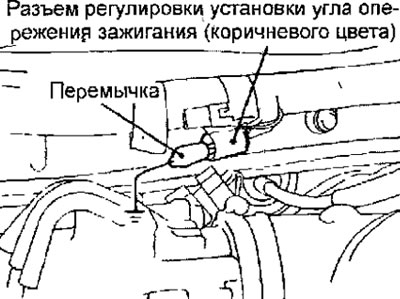


Fig. 3.10. Installing a jumper to check the main ignition timing angle


Note: Connecting this connector pin to ground switches the engine to the main ignition advance mode.


10. Start the engine and let it idle.

11. Check the basic ignition timing.

Main ignition advance angle: 5±2° before TDC

12. If the main ignition timing angle does not correspond to the required one, loosen the ignition distributor mounting bolt and, by rotating the ignition distributor, set the required main ignition timing angle.

13. After adjusting the main ignition timing angle, tighten the distributor mounting bolt.

Tightening torque: 12 Nm

14. Turn off the engine and remove the jumper from the main ignition timing adjustment connector (brown) and replace the waterproof plug.

15. Start the engine and check the ignition timing.

Ignition timing: approximately 10° before TDC

Note

(1) The ignition timing angle setting varies within ±7° even under normal engine operation.

(2) The ignition timing advance angle is automatically increased by approximately 5° to 10° as the altitude increases.
This article is available at: russian, bulgarian, belarusian, ukrainian, serbian, croatian, romanian, polish, slovak, hungarian
This article was reviewed by: Miroslav Rakov
Share with friends:
◀ Previous
Space Star: Petrol engines 4G1
Next ▶

Checking and adjusting clearances in the valve drive of engines 4G1 and 4G13
Checking and adjusting the tension of the power steering pump and air conditioning compressor drive belt
Checking and adjusting the tension of the generator drive belt
Technical data
Checking the ignition timing angle of the 4G13 engine
Checking the engine crankshaft speed at idle speed
Checking the composition of the air-fuel mixture
Compression check
Checking the vacuum in the intake manifold
Similar materials for other Mitsubishi models

➤ Checking and adjusting the ignition timing angle Mitsubishi Colt 2 and 3 (1983-1993)
➤ Checking the ignition timing angle Mitsubishi Lancer 9 (2000-2007, petrol)
➤ Checking/adjusting the ignition timing Mitsubishi Galant 6 and 7 (1987-1998)
➤ Ignition switch Mitsubishi L200 4 (2005-2014, diesel)
➤ Checking the engine oil pressure switch sensor Mitsubishi Outlander 1 (2003-2008)
➤ Checking the ignition timing angle Mitsubishi Pajero 4 (2006-2021)
Link in different formats to this article
Comments and feedback from visitors
No comments yet


Add up two numbers 36 + 19


Carisma (1995-2004) 
  • General information
  • User manual
  • Maintenance
  • Power unit
  • Petrol engines 4G9
  • Diesel engines FBQT
  • Diesel engines F9Q
  • Cooling system
  • Injection system (MPI)
  • Injection system (GDI)
  • Engine electrical equipment
  • Transmission
  • Clutch
  • Mechanical gearbox
  • Automatic gearbox
  • Chassis and running gear
  • Steering
  • Brake system
  • Front suspension and shafts
  • Rear suspension
  • Body and interior
  • Exterior (external elements)
  • Interior (internal elements)
  • Doors, locks and windows
  • Air conditioner
  • Electrical equipment
  • Equipment and devices
  • Headlights and lighting
  • Electrical circuits
Space Star (1998-2005) 
  • General information
  • User manual
  • Maintenance
  • Power unit
  • Petrol engines 4G9
  • Petrol engines 4G1
  • Diesel engines F9Q1
  • Cooling system
  • Fuel injection system GDI
  • Fuel injection system MPI
  • Diesel supply system F9Q1
  • Ignition system
  • Diesel preheating
  • Transmission
  • Clutch
  • Mechanical gearbox
  • Automatic gearbox
  • Chassis and running gear
  • Suspension and drive shafts
  • Brake system
  • Steering
  • Body and interior
  • Exterior (external elements)
  • Interior (internal elements)
  • Doors, locks and windows
  • Heating and air conditioning
  • Electrical equipment
  • Power devices
  • Equipment and devices
MitsubishiMan.ru © 2018–2026 • Mobile version • Articles about Mitsubishi • Contacts • Sitemap: EN BG BY UA RS HR RO PL SK HU • Site search • Bookmark
Colt 2 and 3 (1983-1993) · Colt 4 and 5 (1991-2003) · Colt 5 (1995-2003) · Lancer 3 and 5 (1984-1992) · Lancer 9 (2000-2007) · Galant 5 (1983-1989) · Galant 6 and 7 (1987-1998) · L200 4 (2005-2014) · Outlander 1 (2003-2008) · Pajero 1 and 2 (1982-1999) · Pajero 4 (2006-2021) · Carisma (1995-2004) · Space Star (1998-2005) ·
This resource sets cookies 🍪 to avoid bothering you with repeated data entry.