



Notes
(1) After the vehicle has been parked for a long time, engine oil may leak from the hydraulic valve clearance compensators, and when the engine is started, air will enter the high-pressure chamber of the compensators.
(2) After the vehicle has been parked for a long time, engine oil may drain from the oil supply passage and it will take some time before engine oil is supplied to the hydraulic valve clearance adjusters and air is forced out of the high pressure chambers of the adjusters.
(3) In any of these cases, the abnormal noise can be eliminated by bleeding the hydraulic valve clearance compensators.
1. Check the engine oil level and, if necessary, top it up to normal (Fig. 3.13).
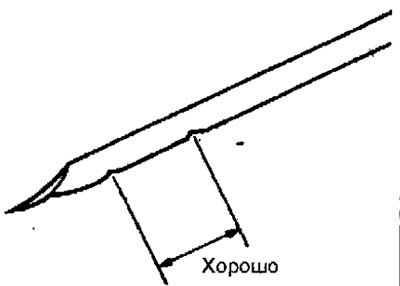
Fig. 3.13. Location of marks on the dipstick for measuring the engine oil level
Notes.
(1) When the engine oil level is too low, air is sucked in through the oil filter and enters the oil supply passage to the hydraulic valve clearance compensators.
(2) If the engine oil level is too high, the engine oil may be foamed by the rotating crankshaft, causing a large amount of air to enter the oil.
(3) If the oil quality deteriorates due to mixing with air, the air will be difficult to separate from the engine oil and its content in the oil will increase.
(4) If air mixed with engine oil is supplied to the high-pressure chamber of the hydraulic valve clearance adjuster, the air is compressed when the valve opens, resulting in abnormal noise when the valve closes (Fig. 3.14). This phenomenon is similar to the increased valve clearance. The hydraulic valve clearance adjuster recovers its functionality after all the air is removed from the high-pressure chamber of the adjuster.
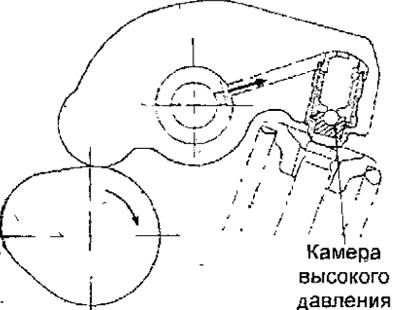
Fig. 3.14. Location of the high-pressure chamber of the hydraulic valve clearance compensator
2. Start the engine and warm it up for 1-3 minutes at idle speed.
3. Perform the cycles shown in Figure 3.15 with the engine running without load. Usually, the abnormal noise will disappear after repeating 10-30 cycles. However, if no change in noise is observed after 30 cycles, the noise may be caused by other engine faults.
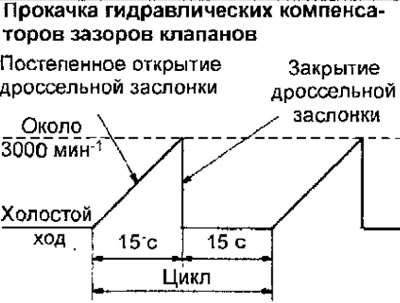
Fig. 3.15. Cycles of changing engine operating modes when bleeding hydraulic valve clearance compensators
4. After eliminating the abnormal noise, repeat the action shown in Figure 3.15 five more times.
5. To ensure that the abnormal noise has been eliminated, let the engine idle for 1-3 minutes.