Contents: Types of smoke ⤓ Troubleshooting table ⤓
As environmental laws become more stringent and the operation of engines that produce too many toxic substances becomes more and more problematic, more and more attention is now being paid to reducing the toxicity of exhaust gases.
There are two main reasons why a diesel engine produces excessive amounts of smoke and toxic substances: vital engine parts are worn out or improperly adjusted.
Smoke is caused by too much fuel for a given amount of air or by the burning of engine oil in the combustion chambers. Excessive emissions are caused by poor fuel condition.
Secondly, white smoke on start-up, which some engines emit when cold, is likely to be an internal engine problem. Many of the smoke or emissions related problems listed may sound familiar and are in addition to the list of problems described earlier.
Types of smoke
Generally speaking, there are three types of smoke that can indicate engine problems. Of course, if the engine has more than one type of problem, more than one type of smoke will be visible.
Black (or dark gray) smoke
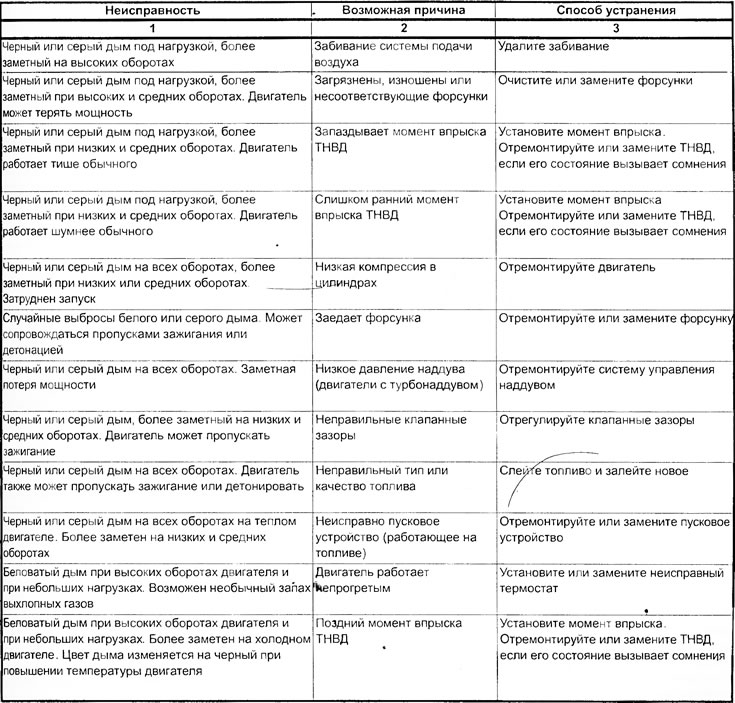
It is a symptom of incomplete combustion of fuel in the engine and can be caused by low combustion pressure and temperature (this is the reason why a diesel engine smokes when starting) and other faults listed below. Some of the burnt fuel comes out in the form of soot particles.
White or grayish-white smoke
Caused by incomplete combustion of fuel in the form of steam or evaporation of engine oil. Coolant may also leak into the combustion chambers through cracks in the cylinder head or through a damaged cylinder head gasket; this produces steam that can be confused with white smoke. The smoke remains and has an "oily" smell, while the steam quickly disappears and is practically odorless.
Blue or bluish-gray smoke
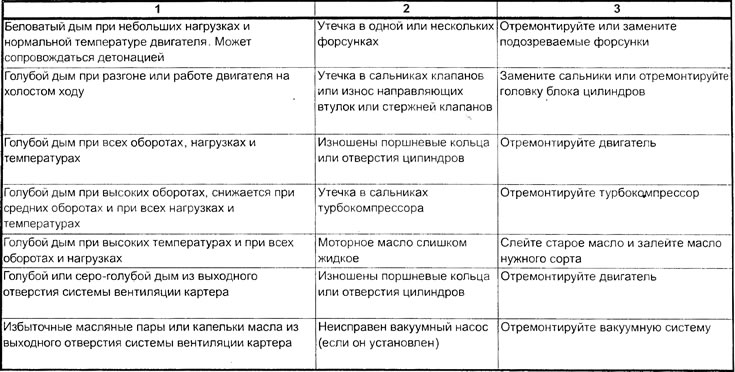
Caused by engine oil burning in the combustion chambers as a result of engine failure, excessive engine oil, or the wrong type of engine oil being used. If the engine is checked with diagnostic equipment, visual smoke limits may be applicable for some older engines (depending on engine operating conditions), but for newer engines, accurate smoke and emissions measurements must be made.
Troubleshooting table