



Disconnect the high pressure fuel hose (1) from the fuel pump.
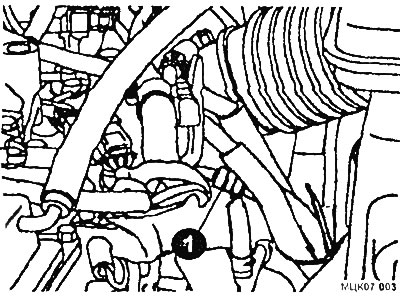
Disconnect the coupling and bypass bolt from the hose and connect a special adapter in their place.
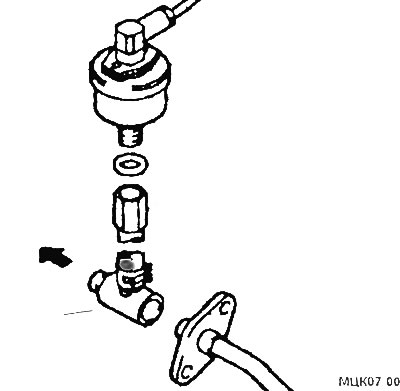
Install a special sensor to measure pressure between the high-pressure fuel hose and the high-pressure fuel pump.
Connect the special fuel pressure sensor to the fuel pressure gauge, installing a gasket between them.
Connect the special fuel pressure sensor to the power source (cigarette lighter) and to the tester.
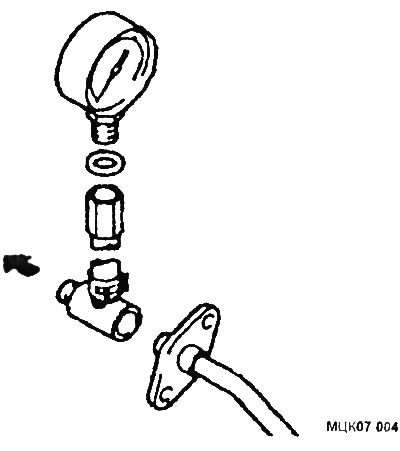
If a pressure gauge is used, then perform the following operations:
- Install the pressure gauge onto the pressure measuring device with the O-ring or gasket between them;
- Install the tool with the pressure gauge assembly between the high pressure fuel hose and the high pressure fuel pump;
- Connect the tester to the diagnostic connector.
CAUTION: Always turn off the ignition before connecting or disconnecting the tester.
The engine does not start, turn the ignition key to the ON position.
By selecting the appropriate item in the tester menu "Checking actuators", activate the low-pressure fuel pump (in the fuel tank). Make sure there are no leaks at the connection points.
After completing the test mode, turn the ignition key to the OFF position.
After starting the engine, let it idle.
With the engine idling, measure the fuel pressure. The required value is 324 kPa.
The fuel pressure at idle speed should not drop even after pressing the gas pedal several times.
If the fuel pressure does not correspond to the required level, then perform a troubleshooting and eliminate them in accordance with the table.
| Sign of malfunction | Possible reasons | Method of elimination |
| Low fuel pressure | Clogged fuel filter | Replace the fuel filter |
| Fuel pressure drops after pressing the gas pedal | Fuel leaks into the fuel return line due to poor seating of the low fuel pressure regulator valve or weakening of its spring | Replace the low fuel pressure regulator |
| Increased fuel pressure | Low pressure created by the low pressure fuel pump | Replace the low pressure fuel pump |
| Valve sticking in low fuel pressure regulator | Replace the low fuel pressure regulator | |
| Clogged fuel return hose to fuel tank | Clean or replace the fuel hose or tube |
Stop the engine and check for changes in the fuel pressure gauge readings. The fuel system is in good condition if the pressure in the fuel line does not decrease within 2 minutes. If the pressure drops, troubleshoot and eliminate the fault in accordance with the table.
| Sign of malfunction | Possible reasons | Method of elimination |
| After the engine stops, the fuel pressure gradually drops | Low fuel pressure regulator valve leaks | Replace the low fuel pressure regulator |
| After the engine stops, the fuel pressure drops immediately | Low pressure fuel pump check valve remains open | Replace the low pressure fuel pump |
| Low fuel pressure | Fuel leaks into the fuel return line due to poor seating of the high pressure fuel regulator valve or weakening of its spring | Replace the high pressure fuel pump |
| Fuel pressure drops after pressing the gas pedal | Low pressure created by the high pressure fuel pump | Replace the high pressure fuel pump |
| Increased fuel pressure | High pressure fuel regulator valve sticking | Replace the high pressure fuel pump |
| Clogged fuel return hose to fuel tank | Clean or replace the fuel hose or tube |
Release residual pressure from the fuel line.
Disconnect the fuel pressure gauge and special tool from the high pressure fuel pump.
Replace the gasket installed on the high-pressure fuel hose with a new one. Before installing the gasket, apply a thin layer of engine oil to its surface.
Connect the fuel hose to the high pressure fuel pump and tighten the flange mounting bolts to the specified torque.
Check connections for fuel leaks.
Disconnect the tester.