



This operation can be performed either with the engine removed from the vehicle or without removing it.
After removing the cylinder head, carefully clean all traces of carbon deposits from the combustion chambers and valve bores, as well as from the valve stems and guides, using a wire brush and scraper. A piece of an old piston ring can be used to pre-clean the combustion chambers.
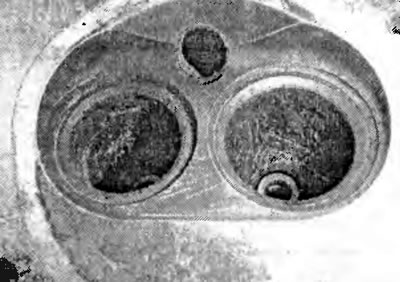
Wash the combustion chambers and valve holes with gasoline, scrape off all foreign material from the surface of the cylinder head with the side of a steel ruler or similar tool, being careful not to damage the surface.
Clean the pistons and the top of the cylinder bores, if the pistons are in the cylinders, you need to take measures to prevent carbon particles from getting into the cylinder and scratching the walls, piston or rings. To do this, turn the crankshaft so that two pistons are at the top of the cylinders. Put a clean rag in the other two cylinders or seal them with paper using tape. Coolant passages and connecting rod bores should also be sealed with adhesive tape to prevent carbon particles from getting into the cooling or lubrication system.
Use a scraper to carefully scrape off any carbon deposits from the piston head, being careful not to scratch the aluminum. Scrape off any carbon deposits from the portion of the cylinder wall surrounding the piston.
CAUTION: Use a vacuum cleaner to remove any carbon deposits that have entered the engine cylinders.
To prevent carbon deposits, polish the piston crown. Remove the rags or tape from the other two cylinders and turn the crankshaft so that the two pistons that were in the lower position move to the upper position. Repeat the operation described above.
[The article is reprinted from this source MitsubishiMan.ru]