



Contents: Float chamber ⤓ Adapter ⤓ Return spring ⤓ Speed increase eccentric, economizer…⤓ Compensator ⤓ Locking plate ⤓ Diffuser, spring and piston ⤓ Plug ⤓ Fuel Air Mixture Adjustment Screw…⤓ Main fuel jet adjusting screw ⤓ Pin and gasket ⤓ Throttle closing drive (automatic…⤓
When disassembling the carburetor, the following parts must not be removed:
- 1. Throttle valve and shaft;
- 2. Painted adjusting screw;
- 3. Carburetor body.
Float chamber
1. The float chamber is firmly held in place by a gasket. Insert the tip of a screwdriver between the carburetor body and the float chamber and, pressing lightly on the float chamber, carefully lift it up (Figure 10.36). The gasket can only be removed when the float chamber is removed. Therefore, do not attempt to remove the gasket together with the float chamber.
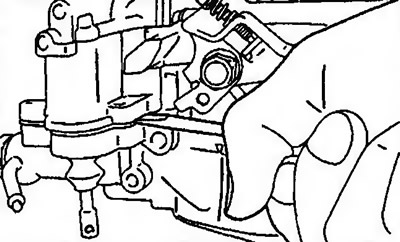
Figure 10.36. Removing the float chamber
Adapter
2. Do not attempt to remove the adapter all at once, as it is held firmly by a gasket. Insert the tip of a screwdriver between the carburetor body and the adapter and, pressing lightly on the adapter, carefully lift it up (Figure 10.37).
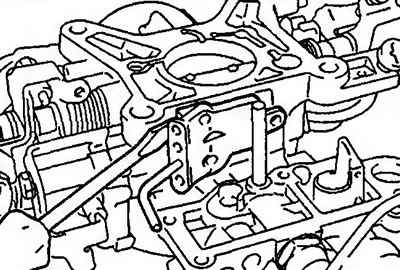
Figure 10.37. Removing the adapter
Return spring
3. Hook the metal wire onto the return spring and remove it (Figure 10.38).
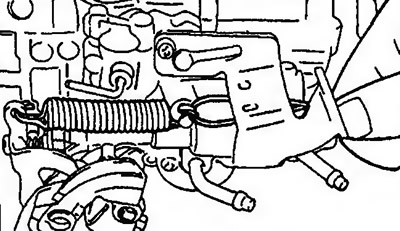
Figure 10.38. Removing the return spring
Speed increase eccentric, economizer rod, spring and seal
4. Remove the snap-on bracket (Figure 10.39). Remove the traction system from it. Loosen the idle speed increase eccentric adjusting screw so that the economizer traction eccentric can be removed. Remove the economizer traction, spring and seal.
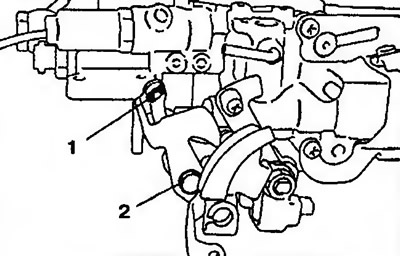
Figure 10.39. Removing the speed increase eccentric, economizer rod, spring and seal. 1 - Snap-on bracket; 2 - Adjusting screw for idle speed increase eccentric
Compensator
5. The gasket is firmly held in its position. Press it out with a screwdriver (Figure 10.40).
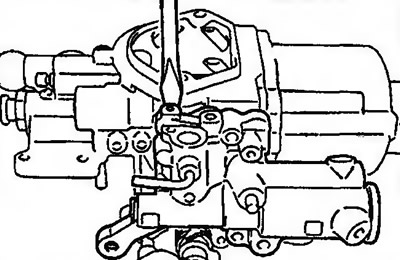
Figure 10.40. Removing the compensator
Locking plate
6. A bolt (thread diameter - 4 mm, length - 20 mm or more) is screwed into the locking plate and it is removed using pliers and a key (Figure 10.41).
Attention! The key is installed across the holes for the air filter support mounting bolts.
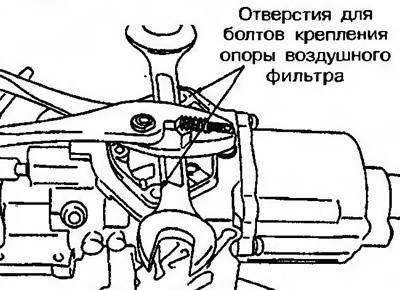
Figure 10.41. Removing the locking plate
Diffuser, spring and piston
7. When removing the diffuser from the carburetor body, do not press it out or use excessive force. The diffuser is easily removed by turning it clockwise or counterclockwise (Figure 10.42).
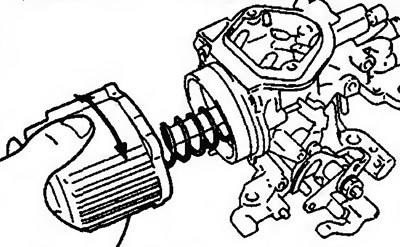
Figure 10.42. Removing the diffuser
8. Use your finger to slightly lift the metering pin so that it does not block the main fuel jet, and pull the diffuser piston to the right corner (Figure 10.43).
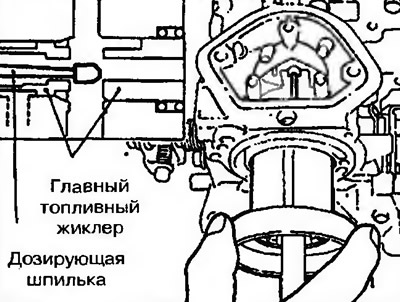
Figure 10.43. Removing the piston and spring
Attention! For the efficient operation of the carburetor, uniform sliding movements of the diffuser piston are important. Also, the inner surface of the piston and diffuser must not be damaged. As soon as the metering pin is removed from the piston, it immediately breaks off. Therefore, the pin must not be removed from the diffuser piston. The metering pin can easily become deformed. Therefore, it must be handled with particular care after removal.
Plug
9. The plug is removed using a cutter (Figure 10.44).
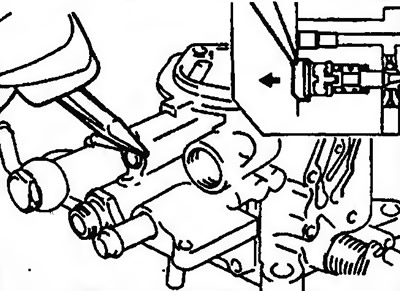
Figure 10.44. Removing the plug
Fuel Air Mixture Adjustment Screw (MAS)
10. Using the MD998299 screwdriver, remove the idle speed limiter and the mixture air/fuel ratio (MAS) adjustment screw (Figure 10.45).
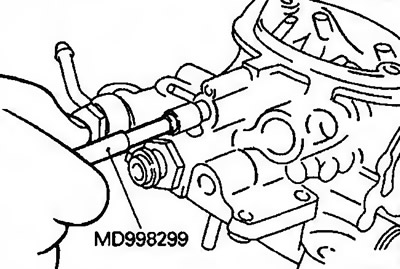
Figure 10.45. Removing the mixture adjustment screw (MAS)
Main fuel jet adjusting screw
11. Hold the main fuel jet adjusting screw with pliers and turn it counterclockwise so that it can be removed from the protective cap (Figure 10.46).
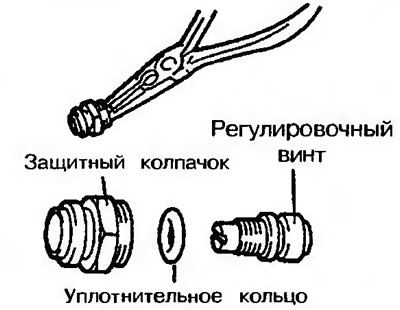
Figure 10.46. Removing the main fuel jet adjusting screw
12. To remove the locking plate from the protective cap of the main fuel jet, use a 5 mm diameter punch, a 21 mm socket wrench and a hammer (Figure 10.47).
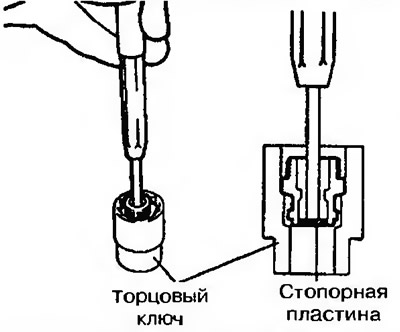
Figure 10.47. Removing the locking plate from the protective cap of the main fuel jet
Pin and gasket
13. Make sure that no paint particles get into the carburetor by removing the yellow paint around the pin.
14. The pin and gasket are carefully removed so that the main fuel jet does not pop out.
Caution: The gasket may stick due to yellow paint.
Throttle closing drive (automatic transmission)
15. Check the throttle actuator diaphragm for damage. Using a hand vacuum pump, create a vacuum of 500 mm Hg and make sure the vacuum is maintained (Figure 10.48). When creating a vacuum, the throttle actuator rod should rise upward. If the vacuum is not maintained, the diaphragm is damaged. In this case, the throttle actuator must be replaced.
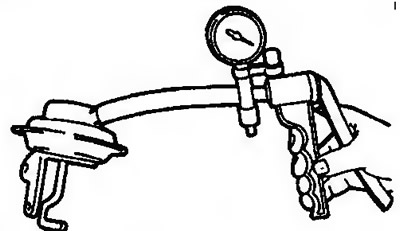
Figure 10.48. Checking the throttle closing actuator membrane