



Contents: Main fuel jet ⤓ Main fuel jet adjusting screw ⤓ Fuel mixture adjustment screw ⤓ Diffuser piston ⤓ Pin, O-ring and lock plate ⤓ Compensator ⤓ Economizer thrust ⤓ Return spring ⤓ Float and pin ⤓ Adjusting the float height ⤓
Caution! Do not damage the piston, diffuser surface, carburetor body opening or main fuel jet with the brush. Do not wash the compensator. Make sure that no dust gets into the ventilation holes. Do not bend the main fuel jet or metering pin to avoid damaging them.
Main fuel jet
16. Install two sealing rings on the jet and insert them together with the spring into the carburetor body.
17. Using a Phillips screwdriver, press the main fuel jet into the carburetor body, align the slot in the jet with the pin hole in the carburetor body, and then install the pin with the gasket (Figure 10.40).
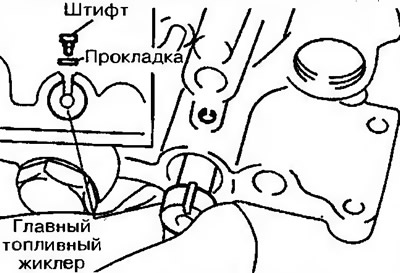
Figure 10.49. Install two sealing rings on the jet and insert them together with the spring into the carburetor body
18. The jet is pressed with a Phillips screwdriver to ensure that it moves evenly (Figure 10.50).
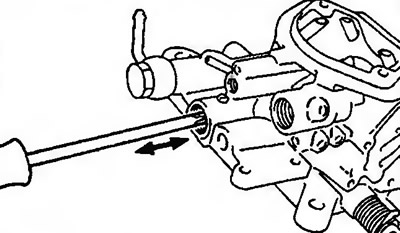
Figure 10.50. The jet is pressed with a Phillips screwdriver to ensure that it moves evenly
Main fuel jet adjusting screw
19. The adjusting screw is screwed into the nozzle plug with your fingers.
20. Using a screwdriver, tighten the plug of the main fuel jet adjusting screw by turning it counterclockwise (Figure 10.51). Do not tighten the screw too much to avoid damaging the thread.
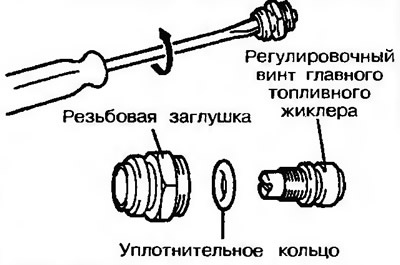
Figure 10.51. Using a screwdriver, tighten the plug of the main fuel jet adjusting screw by turning it counterclockwise
21. The threaded plug of the main fuel jet is installed into the carburetor body through the gasket.
22. The initial adjustment of the main fuel jet adjusting screw is performed using a caliper (Figure 10.52).
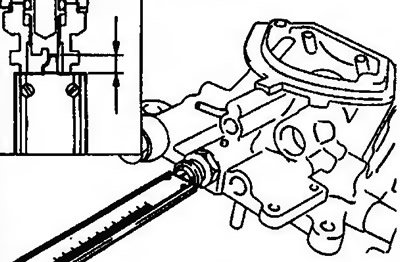
Figure 10.52. Initial adjustment of the main fuel jet adjusting screw is performed using a caliper
Note: The setting parameters are given in the maintenance data table.
Fuel mixture adjustment screw
23. A wire is used to guide the plate. The plate is installed with its rubber part facing inward (Figure 10.53). Then the spring, pin and mixture adjustment screw are installed in the following order (Figure 10.53). The initial adjustment of the mixture adjustment screw is made using a caliper (Figure 10.54).
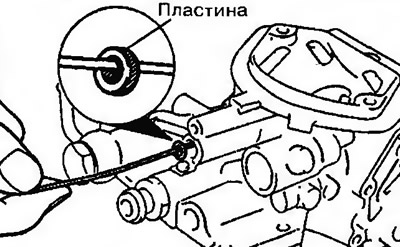
Figure 10.53. A wire is used to guide the plate. The plate is installed with its rubber part facing inward | 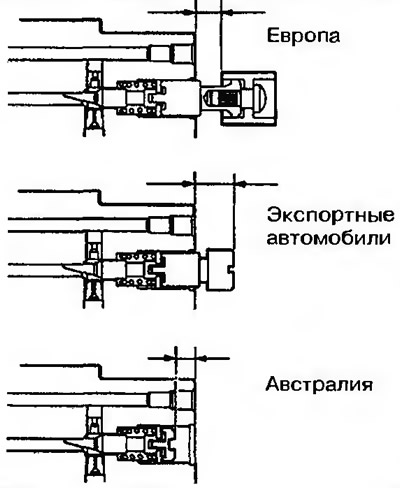
Figure 10.54. Initial setting of the fuel mixture adjustment screw |
Diffuser piston
24. Carefully install the piston into the carburetor body without bending the metering pin. Do not use excessive force when installing the piston.
Caution! If the tip of the metering pin is blocked by the main fuel jet and does not fit, it can be lifted slightly with a finger (Figure 10.55).
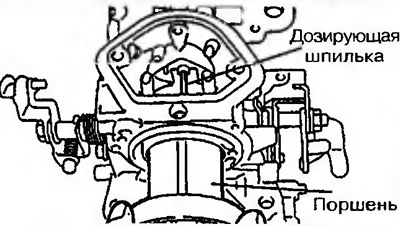
Figure 10.55. Carefully install the piston into the carburetor body without bending the metering pin. If the tip of the metering pin is blocked by the main fuel jet and does not fit, it can be lifted slightly with your finger
Pin, O-ring and lock plate
25. Align the slot in the diffuser piston with the hole in the carburetor body and insert the pin using a screwdriver so that it fits into the piston groove. Make sure that the diffuser piston does not rotate (Figure 10.56).
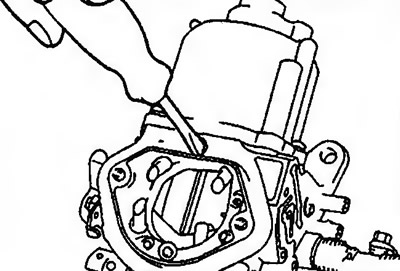
Figure 10.56. Align the slot in the diffuser piston with the hole in the carburetor body and insert the pin with a screwdriver so that it fits into the groove in the piston
26. Install the sealing ring. Tighten the 4 mm bolt onto the lock plate and hammer the plate until it fits snugly against the carburetor body surface (Figure 10.57).
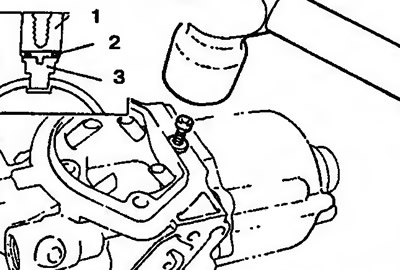
Figure 10.57. Install the sealing ring. Tighten the 4 mm bolt onto the lock plate and hammer the plate until it is flush with the carburetor body surface. 1 - Lock plate; 2 - Sealing ring; 3 - Pin
Compensator
27. First, lightly tighten the three bolts, and then tighten them further. In doing so, observe the order in which they are tightened (Fig. 10.58).
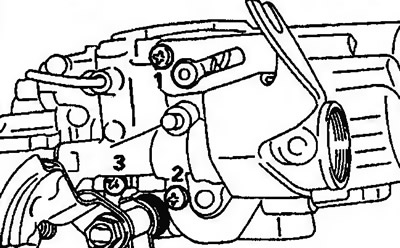
Figure 10.58. First, lightly tighten the three bolts, then tighten them further. Be sure to follow the tightening order
Economizer thrust
28. Install the rod in the correct direction (Figure 10.59).
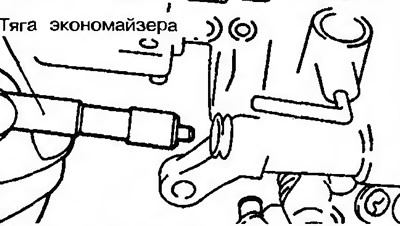
Figure 10.59. Setting the economizer draft in the correct direction
Return spring
29. Attach the inner return spring to the outer one. Attach the return spring using metal wire (Figure 10.60).
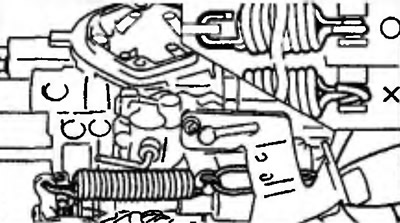
Figure 10.60. Attach the inner return spring to the outer one. Attach the return spring using a metal wire
Float and pin
30. When installing the float and pin, adjust the height of the float (Figure 10.61).
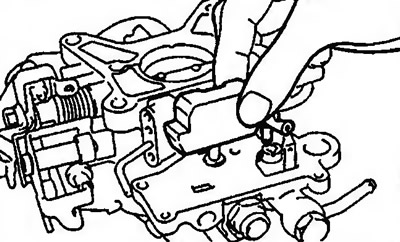
Figure 10.61. When installing the float and pin, adjust the height of the float
Adjusting the float height
31. Turn the carburetor body and remove the hook installed on the needle valve (Figure 10.62).
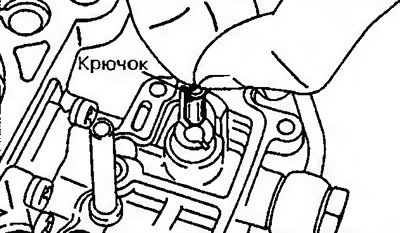
Figure 10.62. Turn the carburetor body and remove the hook installed on the needle valve
32. Install the float and float pin.
33. Gently press the float upwards until it stops (large arrow in Figure 10.63) and measure the gap between the needle valve and the float lever (small arrow in Figure 10.63). Nominal value: 1.0 mm.
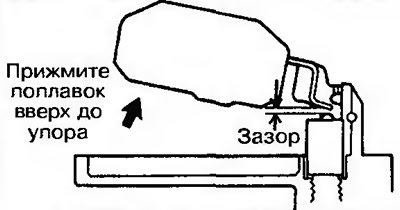
Figure 10.63. Gently push the float up to the stop (large arrow) and measure the gap between the needle valve and the float lever (small arrow)
34. If the gap does not correspond to the nominal value, it must be adjusted by bending the lever (Figure 10.64). When bending, the gap increases, when straightening, it decreases.
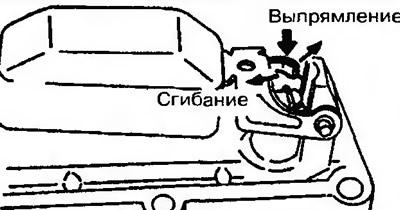
Figure 10.64. Adjusting the float position
35. Release the float so that it hangs down and measure the distance between the float and the carburetor body (Figure 10.65). Nominal value: 4.3 mm.
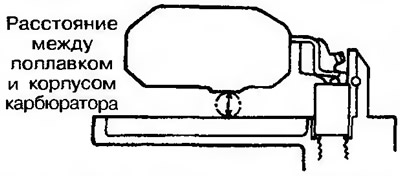
Figure 10.65. Release the float so that it hangs down and measure the distance between the float and the carburetor body
36. If the distance does not correspond to the nominal one, it can be adjusted by bending the element (arrow) shown in Figure 10.66.
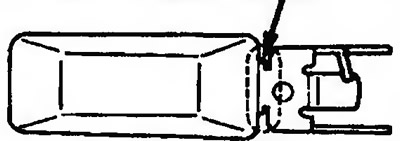
Figure 10.66. If the distance does not correspond to the nominal one, it can be adjusted by bending the element (arrow)
37. Remove the float and install the hook on the needle valve.
38. Install the float by hanging it by the hook with a tooth.