



The oil change is carried out on a cold gearbox.
Raise the car horizontally.
If present, remove the crankcase and gearbox guard.
Check for oil leaks in the gearbox.
Unscrew the oil drain plug and drain the oil. Drain the oil for as long as possible.
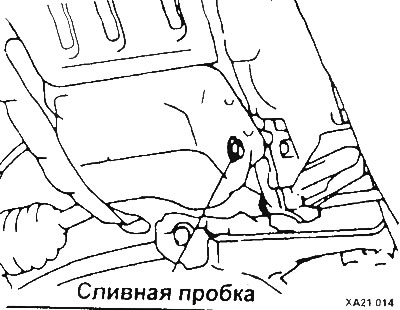
Remove the oil pan.
Inspect the oil filter for clogging or damage.
Remove the magnet from the oil pan and clean it.
Clean the inside of the oil pan and the mating surfaces of the oil pan and gearbox.
Return the magnet to the oil pan.
Install the oil pan with a new gasket, tightening the mounting bolts to 10 Nm.
Tighten the drain plug with a torque of 35 Nm.
Place a funnel with a strainer on the dipstick tube.
Fill the box with about 4 liters of gearbox oil and check the oil level with the dipstick. The total oil volume is 6 liters, but when changing the oil, only 4.5 liters are needed, and the rest of the oil settles in the torque converter.
Turn on the engine and let it idle for a few minutes.
Apply the handbrake and go through all gear positions with the shift lever in position N.
Measure the oil level in the gearbox with the engine running and top up to the COLD mark.
Warm up the engine while driving and measure the oil level in the gearbox while the engine is running. The oil level should now be between the two HOT marks. Otherwise, adjust the oil level. The oil level should not be below the mark corresponding to the current temperature, as this will cause the gearbox to break down. If the level is above the mark, the gearbox may overheat and the oil may spill out. Excess oil must be sucked out.
After inserting the oil dipstick all the way, check the reliability of the dipstick fit to prevent dirt from getting into the gearbox.
(The original material is posted on the website: www.MitsubishiMan.ru)