
English Русский
Български
Беларускі
Український
Српски
Hrvatski
Română
Polski
Slovenský
Magyar
Articles Bookmark Contacts Sitemap   
Company Audi Company Ford Company Hyundai Company Kia Company Mazda Company Mercedes-Benz Company Nissan
MitsubishiMan.ru


Home Colt Lancer Galant L200 Outlander Pajero Others
Carisma (1995-2004) Space Star (1998-2005)

Measuring fuel pressure on the line between the high-pressure fuel pump and the injectors (Mitsubishi Space Star)

  • Home
  • Mitsubishi
  • Space Star (1998-2005)
  • Power unit
  • Fuel injection system GDI
  • Measuring fuel pressure on the line between the high-pressure fuel pump and the injectors
0
Note: Measuring the pressure on the line between the high-pressure fuel pump and the injectors should be carried out after you have made sure that the fuel pressure created by the pump (between the low and high pressure sides) is normal.


1. Connect the MUT-II device to the diagnostic connector.

2. Disconnect the intermediate connector of the injectors (Fig. 6.15, 6.16).
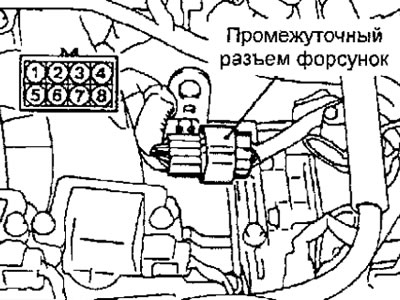


Fig. 6.15. Location of the intermediate injector connector on a vehicle manufactured since 1999
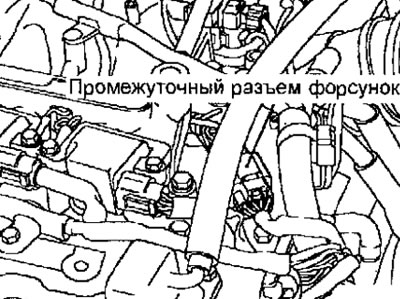


Fig. 6.16. Location of the intermediate injector connector on a vehicle manufactured since 2000


3. Turn the ignition switch key to the ON position.

4. Select item #74 from the Data list menu of the MUT-II instrument.

5. Turn the engine crankshaft with the starter for 2 seconds and visually check for fuel leaks through the connections.


Warning: If fuel leaks are present, stop the engine immediately and eliminate the source of the leak.


6. Make sure that the fuel pressure of at least 1 MPa is maintained for 20 seconds after the engine crankshaft has finished turning with the starter.

The article was obtained from this portal: MITSUBISHIMAN.ru

7. If the fuel pressure is below 1 MPa, it means there are leaks in the high-pressure line and it is necessary to check the fuel system.

8. Turn the ignition switch key to the OFF position.

9. Connect the intermediate connector of the injectors.

10. Start the engine and let it idle.

11. With the engine idling, measure the fuel pressure.

Nominal pressure: 4.0-7.0 MPa

12. Make sure that the fuel pressure does not drop at idle speed even after pressing the accelerator pedal several times.

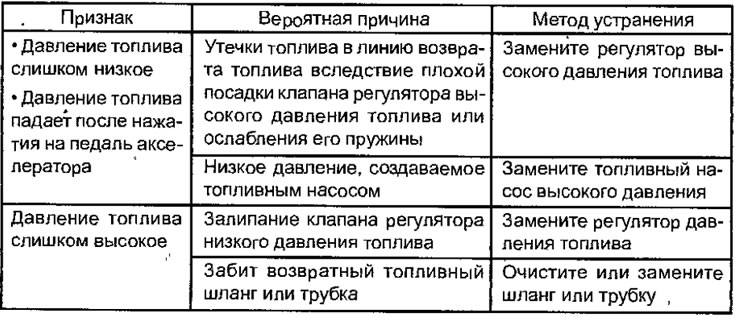
13. If any fuel pressure is out of tolerance, diagnose and repair according to the Fuel System Pressure Diagnostic Chart.

Fuel System Pressure Diagnostic Chart


14. Turn off the engine and turn the ignition switch to the OFF position.

15. Disconnect the MUT-II device from the diagnostic connector.
This article is available at: russian, bulgarian, belarusian, ukrainian, serbian, croatian, romanian, polish, slovak, hungarian
This article was reviewed by: Miroslav Rakov
Share with friends:
◀ Previous
Space Star: Fuel injection system GDI
Next ▶

Checking the pressure generated by the fuel pump
Adjusting the accelerator pedal position sensor on a car manufactured since 2000
Adjusting the accelerator pedal position sensor on a car manufactured since 1999
Adjusting the throttle position sensor
Cleaning the throttle assembly
Checking the fuel system for leaks
Reducing pressure in the fuel system
Checking the operation of the fuel pump
Checking the fuel pump pressure control relay and throttle actuator
Checking the relay of the injector control signal generator
Similar materials for other Mitsubishi models

➤ Checking the fuel pressure between the high pressure fuel… Mitsubishi Colt 4 and 5 (1991-2003)
➤ High pressure fuel pump (HPFP) Mitsubishi Lancer 3 and 5 (1984-1992)
➤ Checking the fuel pump, measuring the fuel pressure Mitsubishi Galant 6 and 7 (1987-1998)
➤ Fuel supply control valve to the high-pressure fuel pump Mitsubishi L200 4 (2005-2014, diesel)
➤ Testing the system's hydraulic pump for developed pressure Mitsubishi Outlander 1 (2003-2008)
➤ High pressure fuel pump Mitsubishi Pajero 4 (2006-2021)
Link in different formats to this article
Comments and feedback from visitors
No comments yet


Add up two numbers 38 + 48


Carisma (1995-2004) 
  • General information
  • User manual
  • Maintenance
  • Power unit
  • Petrol engines 4G9
  • Diesel engines FBQT
  • Diesel engines F9Q
  • Cooling system
  • Injection system (MPI)
  • Injection system (GDI)
  • Engine electrical equipment
  • Transmission
  • Clutch
  • Mechanical gearbox
  • Automatic gearbox
  • Chassis and running gear
  • Steering
  • Brake system
  • Front suspension and shafts
  • Rear suspension
  • Body and interior
  • Exterior (external elements)
  • Interior (internal elements)
  • Doors, locks and windows
  • Air conditioner
  • Electrical equipment
  • Equipment and devices
  • Headlights and lighting
  • Electrical circuits
Space Star (1998-2005) 
  • General information
  • User manual
  • Maintenance
  • Power unit
  • Petrol engines 4G9
  • Petrol engines 4G1
  • Diesel engines F9Q1
  • Cooling system
  • Fuel injection system GDI
  • Fuel injection system MPI
  • Diesel supply system F9Q1
  • Ignition system
  • Diesel preheating
  • Transmission
  • Clutch
  • Mechanical gearbox
  • Automatic gearbox
  • Chassis and running gear
  • Suspension and drive shafts
  • Brake system
  • Steering
  • Body and interior
  • Exterior (external elements)
  • Interior (internal elements)
  • Doors, locks and windows
  • Heating and air conditioning
  • Electrical equipment
  • Power devices
  • Equipment and devices
MitsubishiMan.ru © 2018–2026 • Mobile version • Articles about Mitsubishi • Contacts • Sitemap: EN BG BY UA RS HR RO PL SK HU • Site search • Bookmark
Colt 2 and 3 (1983-1993) · Colt 4 and 5 (1991-2003) · Colt 5 (1995-2003) · Lancer 3 and 5 (1984-1992) · Lancer 9 (2000-2007) · Galant 5 (1983-1989) · Galant 6 and 7 (1987-1998) · L200 4 (2005-2014) · Outlander 1 (2003-2008) · Pajero 1 and 2 (1982-1999) · Pajero 4 (2006-2021) · Carisma (1995-2004) · Space Star (1998-2005) ·
This resource sets cookies 🍪 to avoid bothering you with repeated data entry.