



More air is drawn into the cylinders by compressing the oxygen-containing air, which improves fuel combustion.
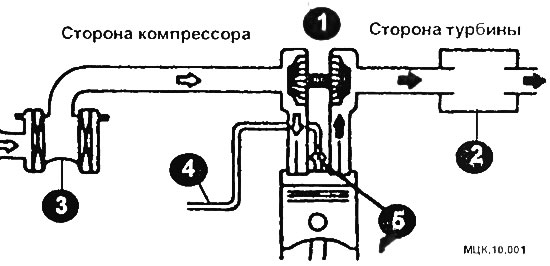
Turbocharger connection diagram
1 - turbocharger; 2 - muffler; 3 - air filter; 4 - fuel; 3 - fuel injector.
The turbine rotation speed reaches 140 thousand revolutions per minute, so it requires appropriate lubrication (motor oil). Any dirt getting into the oil reduces the service life of the unit. Oil and filters must be changed periodically, and the filter is changed every time the oil in the engine is changed. Always fill in oil of the recommended viscosity.
Although turbocharging systems do not require special maintenance, some general rules still need to be followed. Namely:
After starting the engine, make sure that the oil pressure is sufficient. Let the engine idle for a few minutes to ensure that the oil circulates and warms up.
When starting the engine in cold weather, let the engine run for 1 or 2 minutes before driving to warm up the oil. Thickened oil should become liquid.
Before shutting off the engine after driving, let it idle for a short time. This will equalize the temperature inside the engine and allow the oil to cool. Stopping the engine suddenly causes hot oil to be trapped inside the very hot turbocharger and causes the oil to cake into solid particles that can clog oil passages and ruin bearings.
If a hot engine suddenly stops while running, it should be restarted immediately. This will prevent a rapid increase in temperature inside the turbocharger and possible mechanical damage to the turbine and compressor.
After removing the engine from the car, you should cover the turbocharger air ducts with rags to prevent dirt and dust from getting in, which can then damage the bearings. This will also prevent the turbine from spinning in the bearings when there is no oil flowing to them.
NOTE: Turbocharger noise may be heard after the engine has stopped. This air noise should not be confused with the noise of a failed bearing, which has a higher mechanical sound.