



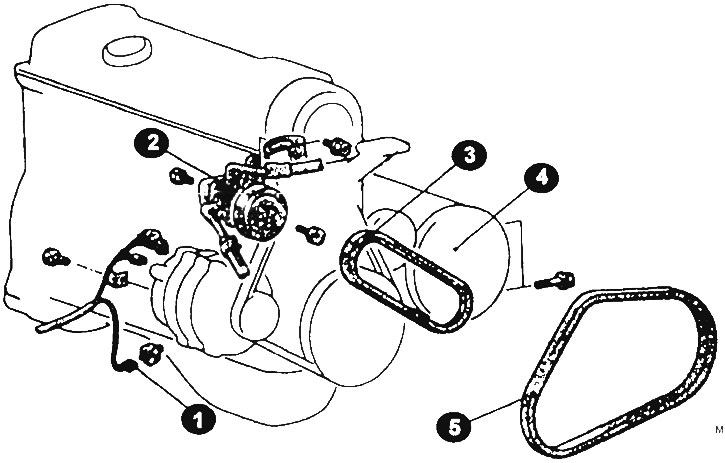
External engine components
1 - Wiring harness connectors; 2 - Power steering pump; 3 - power steering pump drive belt; 4 - air conditioning compressor; 5 - V-belt.
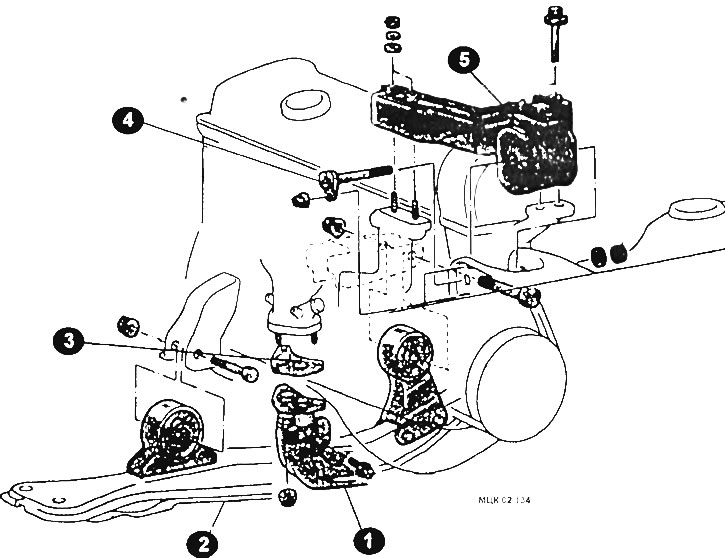
Engine mounts
1 - intake pipe of the exhaust gas system; 2 - longitudinal beam; 3 - gasket; 4 - mounting bolt; 5 - upper engine support.
WARNING: Gasoline is extremely flammable, so extreme caution must be exercised when working on any part of the fuel system. Do not smoke or allow open flames in the work area. If gasoline comes into contact with your skin, wash it off immediately with plenty of soap and water.
When working with any component of the fuel system, wear safety glasses and have a fire extinguisher handy.
The engine without the gearbox is lifted upward using a crane.
Disconnect the ground cable from the battery. Disconnect the battery only when the ignition is off. This will protect against damage.
Open the engine hood and drain the coolant.
Remove the gearbox.
Remove the radiator.
Drain the engine oil into a suitable container.
Remove the air filter; disconnect the warm air, low pressure and crankcase ventilation hoses.
Disconnect the throttle cable and move it to the side.
Disconnect the heater hoses, first pushing the clamps back.
Disconnect the low pressure hose of the brake booster from the suction pipe.
The article is reprinted from a web resource: www.MitsubishiMan.ru
Carburetor engine: disconnect the supply hose from the fuel pump and the fuel return hose from the carburetor, having first loosened the clamps.
Fuel Injected (MPI) Engine: Remove the fuel feed hose connection plate from the fuel rail; remove the sealing ring, when installing the ring replace it with a new one, but first you need to release the pressure.
Attach a chain or cable to the eyes.
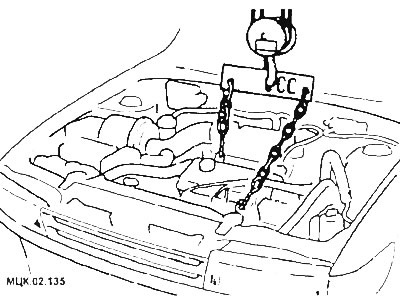
Slowly raise the engine enough to relieve the load on its mounts.
Unscrew the engine beam.
Remove the lower engine mounts.
Check that all wires and hoses are disconnected from the engine.
Carefully lift the engine with a crane to avoid damaging the body.
Installation
Check all engine mounts, oil and fuel hoses for cracks or other damage and replace if necessary.
Check the clutch slave disk. If there is significant wear and high mileage, replace the clutch as a set. If there is noise from the release bearing, replace the bearing, check the wear of the release bearing.
Clean and lightly grease the clutch release bearing and drive shaft splines.
Carefully insert the engine into the engine compartment, being careful not to damage the drive shaft.
Place the engine on the supports and secure it.
Disconnect the lifting device.
Secure the muffler pipe with a new gasket to the exhaust manifold with new nuts.
Secure the air conditioning compressor and then the power steering pump.
Install the V-belt.
Connect the connector to the oil pressure switch.
Connect the electrical wires to the generator.
Lower the car.
Attach all low pressure hoses and secure them with clamps.
Connect all electrical wires to the engine.
For carburetor models, connect the fuel inlet and outlet hoses to the fuel pump and to the carburetor and secure with clamps.
Fuel injection engine: Connect and secure the fuel supply pipe with a new gasket.
Connect the throttle cable to the throttle body and to the heel.
Connect the low pressure hose from the brake booster to the exhaust manifold and secure it with a clamp. Also put on and secure the heater hoses with clamps.
Install the radiator and then the gearbox.
Place the engine compartment hood back in its original position.
Fill the engine with oil and check the level in the engine and gearbox, top up if necessary.
Check the concentration of antifreeze in the coolant and top it up.
Adjust the throttle cable.
Connect the ground wire to the battery.
Warm up the engine to normal operating coolant temperature.
Check the tightness of all hose connections.
Make sure the ignition timing is correct and check the engine idling speed.
Set the clock.