



2. Disconnect the line from the high pressure fuel hose (Figure 8.8).
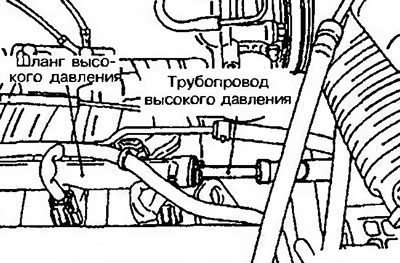
Figure 8.8. Disconnect the high-pressure fuel line from the high-pressure line
3. Connect the MD99-8742 adapter to the MD998709 adapter (Figure 8.9). Install the pressure gauge onto the MD998709 adapter. When attaching the pressure gauge, use an O-ring or gasket to ensure a tight seal.
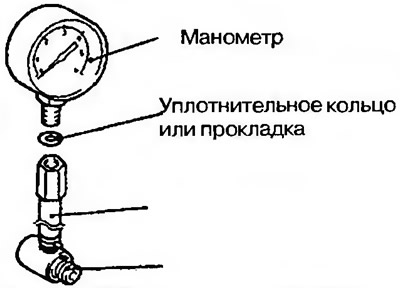
Figure 8.9. Connect the MD998742 adapter to the MD998709 adapter. Install the pressure gauge on the MD998709 adapter
4. Install a pressure gauge with adapters between the high pressure pipeline and the hose (Figure 8.10).
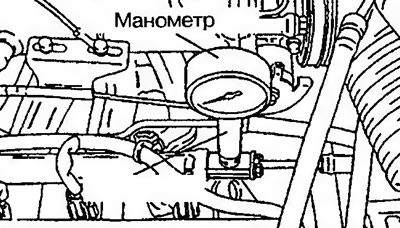
Figure 8.10. Install a pressure gauge with adapters between the high pressure pipeline and the hose
5. Connect the fuel pump connector with a bypass cable to the positive terminal of the battery and operate the fuel pump (Figure 8.11). Check the tightness of the pressure gauge and adapter connections, since the fuel is under pressure.
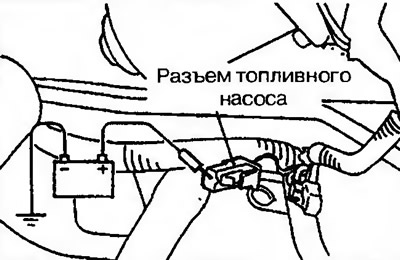
Figure 8.11. Connect the fuel pump drive connector with a bypass cable to the positive terminal of the battery and operate the fuel pump
6. Disconnect the bypass wire from the pump drive terminal to stop the pump from running.
7. Start the engine and let it idle.
8. Measure the fuel pressure at idle. Normal value: 265 kPa at idle.
9. Disconnect the vacuum hose from the fuel pressure regulator and close its end with your finger (Figure 8.13). Measure the fuel pressure. Normal value: 324-343 kPa at idle.
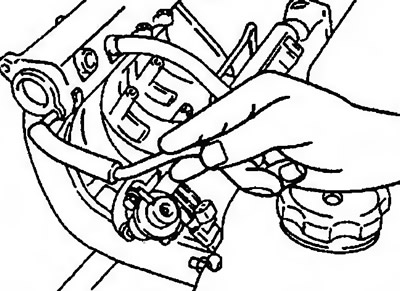
Figure 8.13. Disconnect the vacuum hose from the fuel pressure regulator and close the end with your finger. Measure the fuel pressure
10. Make sure that the fuel pressure does not decrease after repeated increases in engine speed at idle speed.
11. While holding the fuel drain hose, increase the engine speed at idle, then measure the pressure in the drain hose.
[The original article is on MITSUBISHIMAN.ru]
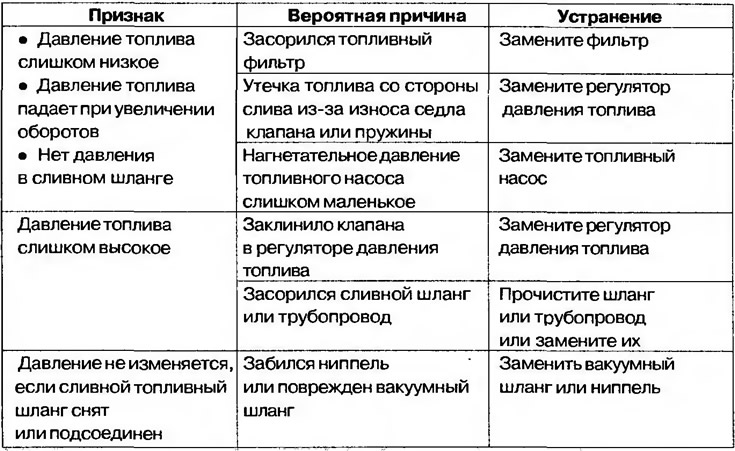
12. If the measured fuel pressure values deviate from the norm, troubleshoot according to the following table 8.7.
Table 8.7. Checking fuel pressure
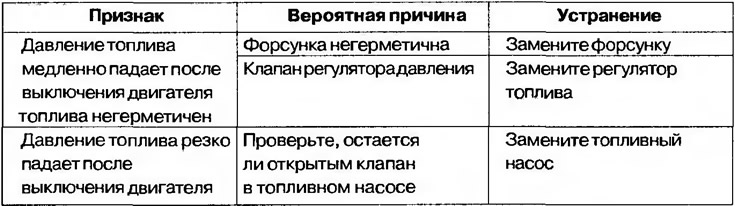
13. Turn off the engine and check the changes in the pressure gauge readings. The condition is satisfactory if the value does not decrease within 2 minutes. If the value decreases, set the rate of decline and eliminate the malfunction according to Table 8.8.
Table 8.8. Checking Fuel Pressure (cont.)
14. Decompress the system.
15. Disconnect the pressure gauge and adapters from the system.
16. Replace the sealing ring with the high pressure fuel hose connection. Apply engine oil to the gasket.
17. Place the high pressure hose on the pipeline and tighten to a torque of 5 Nm.
18. Check for fuel leaks. Apply battery voltage to the fuel pump connector and operate the pump. Under fuel pressure, check the tightness of the system connections.