



Contents: Bulkhead ⤓ Installation ⤓
1. The master brake cylinder is installed in the engine compartment on the servo booster.
2. Pump out as much brake fluid from the reservoir as possible.
3. Place rags under the tube connections and prepare caps or bags to cover the ends of the tubes after disconnecting.
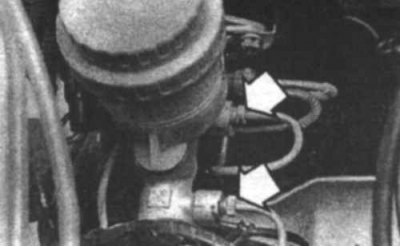
8.4 Unscrew the nuts of the brake pipe connections (indicated by arrows)
4. Unscrew the connecting nuts and disconnect the brake pipes from the cylinder (8.4).
5. Move the ends of the tubes away from the cylinder and close their ends.
6. Disconnect the master cylinder connection connector, then unscrew the nuts securing the cylinder to the servo amplifier (8.6). Remove the cylinder.
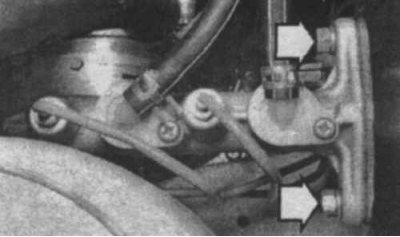
8.6 Disconnect the connection connectors and unscrew the cylinder mounting nuts (indicated by arrows)
Bulkhead
7. Before starting the overhaul, purchase the appropriate repair kit.
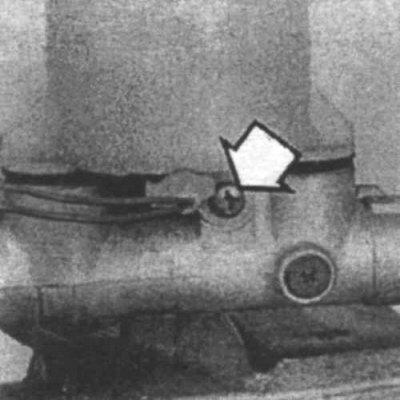
8.8a Unscrew the tank mounting screw (indicated by the arrow).
8. Inspect the tank bushings for signs of leakage and remove the tank (8.8a and 8.8b).
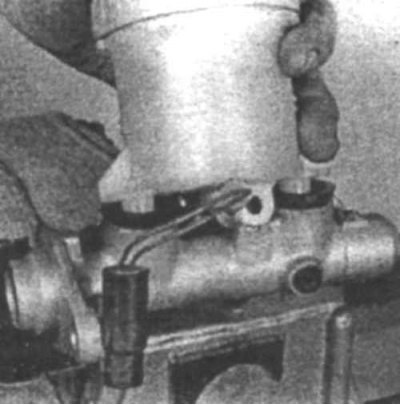
8.8b...and remove the tank
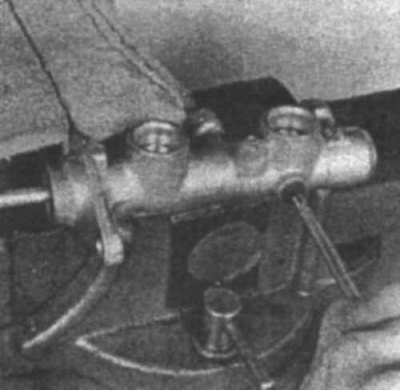
8.9 Press the pistons into the cylinder and remove the lock screw
14. Connect the brake pipe and tighten the connection nut, then tighten the cylinder mounting bolts to the specified tightening torque.
9. Clamp the cylinder in a vice. Lower the pistons into the cylinder and unscrew the locking screw on the side of the cylinder (8.9).
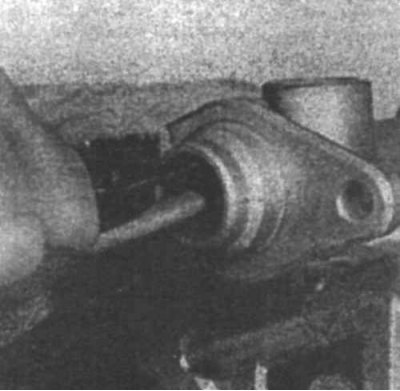
8.10 Press the pistons inward and remove the split retaining ring
10. Carefully remove the retaining ring on the edge of the cylinder (8.10).
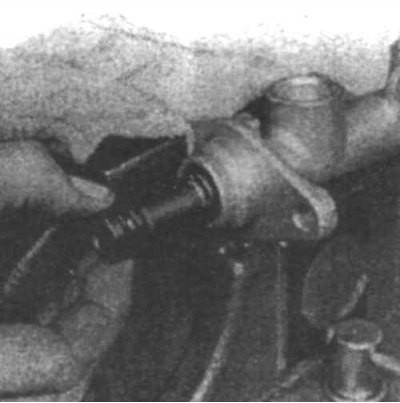
8.11a Remove the primary piston from the cylinder
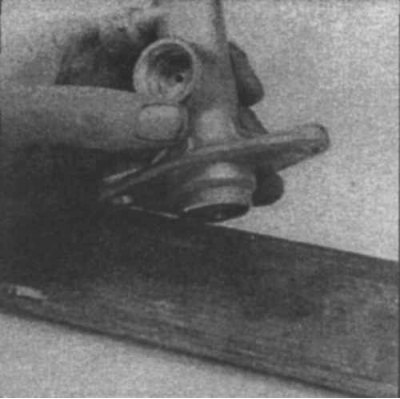
8.11b To remove the secondary piston, tap the cylinder on wood
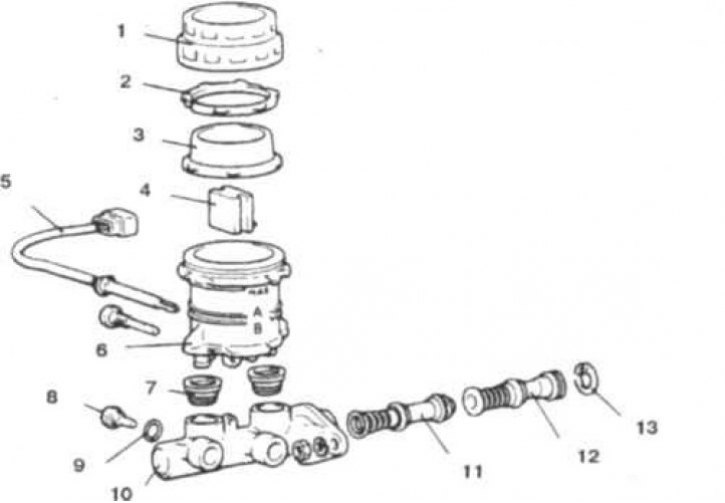
8.11v Elements of the master brake cylinder
1. Lid; 2. Rings; 3. Diaphragm; 4. Float; 5. Brake fluid level sensor; 6. Tank; 7. Seals; 8. Locking screw; 9. Gasket; 10. Master cylinder; 11. Secondary piston; 12. Primary piston; 13. Ring; 14. Repeat this operation until all the air is removed and clean brake fluid flows out of the hole, then close the plug and repeat this operation with the second hole and plug. When bleeding, it is not necessary to replace the plug each time - you can simply close the hole with your finger.
11. Remove the inner cylinder elements (8.11a, 8.11b and 8.11c).
12. Inspect the inside of the cylinder for deep scratches or other damage and replace the cylinder if necessary. Install all the spare parts from the repair kit and install a new snap ring.
13. Before installing the master cylinder, it must be bled. To do this, clamp the cylinder in a vice, install plugs on the outlet ports and fill the reservoir with brake fluid. Open one plug and, by pressing on the piston, remove air from the cylinder, then close the plug so that air does not get back into the cylinder.
14. Repeat this operation until all the air is removed and clean brake fluid flows out of the hole, then close the plug and repeat this operation with the second hole and plug. When bleeding, it is not necessary to replace the plug each time - you can simply close the hole with your finger.
Installation
15. Install the cylinder on the servo booster and tighten the mounting nuts lightly. Connect the brake pipes, then finally tighten the mounting nuts of the master cylinder and brake pipes. Fill the brake fluid into the reservoir and bleed the brake system.